
You know that moment when a package arrives and you feel excited before you even open it? That moment does not happen by accident. It happens because someone chose the right box.
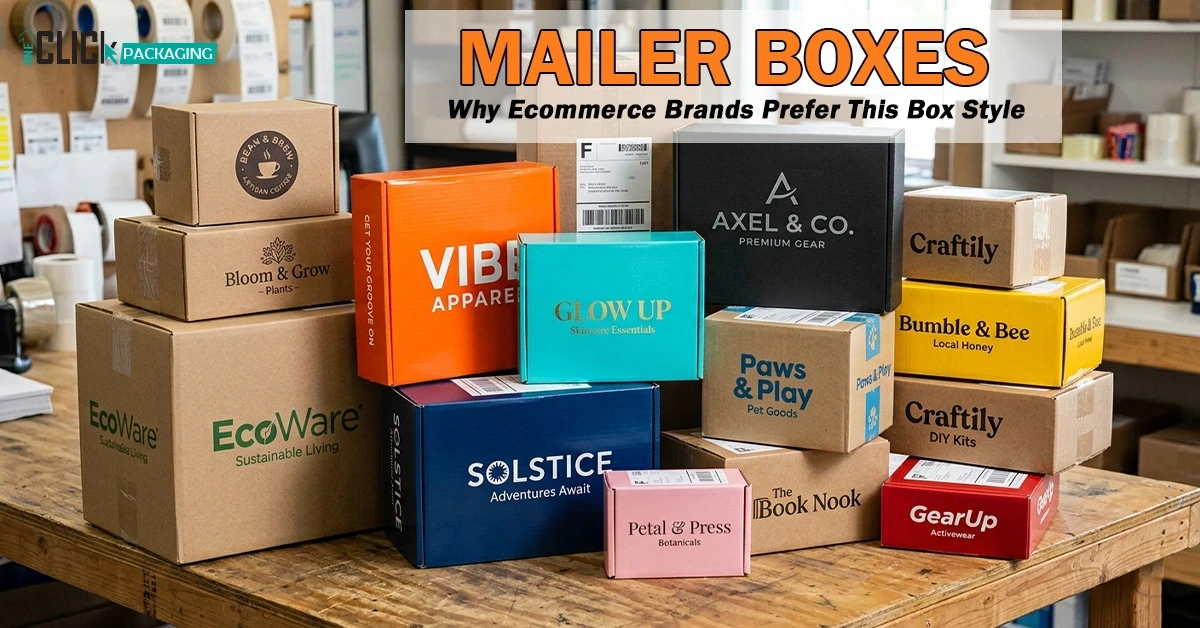
Mailer boxes are behind that feeling more often than any other packaging style in ecommerce today for brands working with a reliable packaging box supplier. They are rigid. They are brandable. They protect your product through the chaos of last-mile delivery. And they arrive looking like something worth photographing.
In 2026, with unboxing content generating billions of views and return shipping costs eating into margins, the packaging decision is no longer just a logistics call. It is a brand call. And mailer boxes keep winning that decision for one simple reason: they do three jobs at once. They ship, they protect, and they market.
This guide breaks down exactly why ecommerce brands prefer mailer boxes, what makes them different from other box styles, and how to decide if they are right for your products and your budget.
Quick Answer: What Makes Mailer Boxes the Ecommerce Default?
Mailer boxes are self-locking, rigid corrugated or paperboard boxes with a tuck-in lid. They do not need tape to close. They arrive flat-packed, assemble in seconds, and can be printed inside and out with your brand. For ecommerce brands shipping direct to consumer, they hit the sweet spot between protection, cost, and brand presentation.
The short version: mailer boxes make your brand look intentional the moment a customer picks up their order. That first impression drives reviews, repeat purchases, and social sharing at a rate that plain brown boxes simply cannot match.
What Are Mailer Boxes and How Are They Built?
A mailer box is a one-piece corrugated or chipboard box with interlocking flaps at the top, similar in structure to tuck top boxes.The lid folds over and locks into place without tape or glue. Most are made from E-flute or B-flute corrugated board, which gives them a rigid feel while keeping the wall thickness manageable for DIM weight calculations.
Here is what separates a mailer box from a standard shipping box structurally:
• The lid and base are attached. There is no separate lid to lose.
• The construction style is called a full overlap or tuck-top auto-bottom, depending on the variant.
• The box assembles from flat without tape, which speeds up pack stations significantly.
• The exterior and interior surfaces accept high-quality print, including full color CMYK, spot UV, and foil stamping.
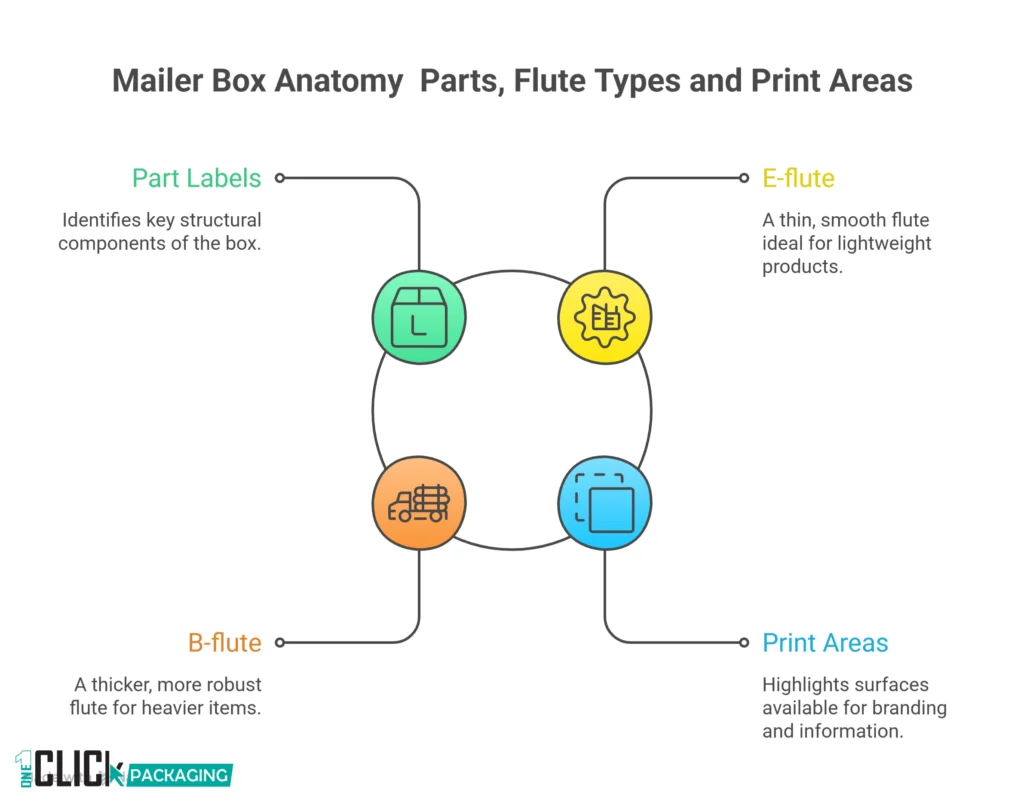
Two flute grades dominate ecommerce use. E-flute offers a smooth surface that prints beautifully and works well for lighter products up to about 2 kg. B-flute is thicker and handles heavier items or products that need more crush resistance during transit.
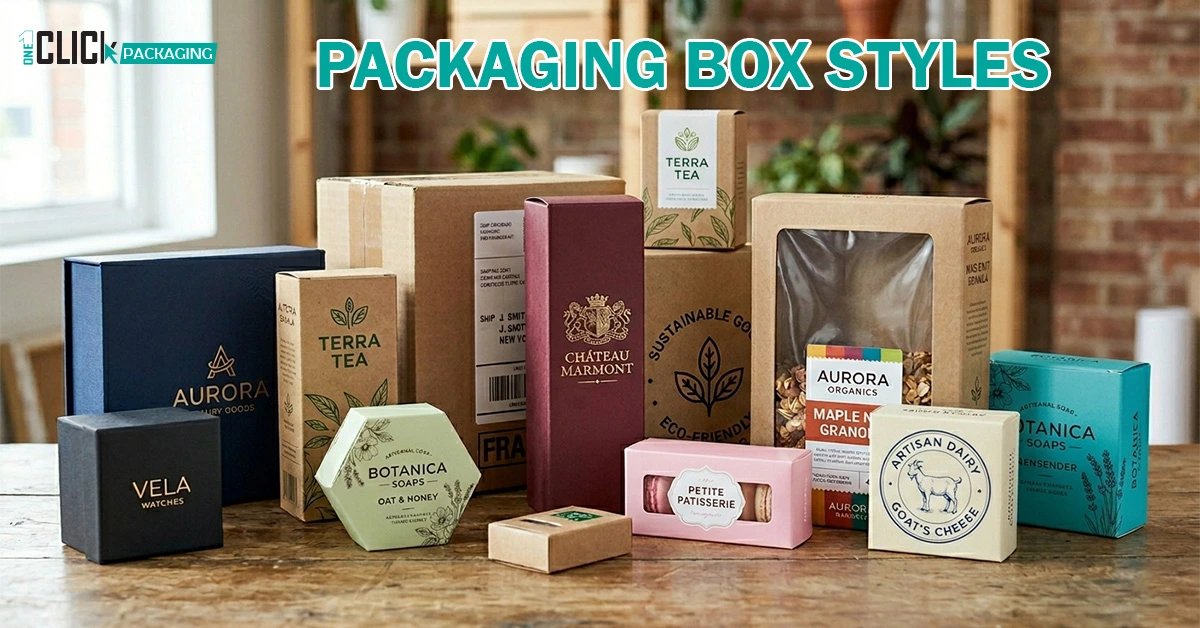
Related: Understanding all packaging box styles— Packaging Box Styles Guide Brands Use to Stand Out
Why Ecommerce Brands Choose Mailer Boxes Over Other Box Styles
I have talked to packaging buyers at small Shopify stores and mid-size DTC brands. The reasons they pick mailer boxes over regular shipping boxes come down to five consistent points.
1. No Tape Required Means Faster Pack Times
On a busy shipping day, every second at the pack station matters. A mailer box assembles in three to five seconds without tape. A standard RSC shipping box requires tape on the bottom, tape on the top, sometimes reinforcement tape on corners. Over 500 orders a day, that difference adds up to real labor cost savings.
One apparel brand I worked with reduced their average pack time from 48 seconds to 31 seconds per order after switching from taped shipping boxes to mailer boxes. That translated to roughly 2.3 additional hours of pack capacity per day without hiring anyone new.
2. Branding Surface on Every Side
A plain brown shipping box is a missed marketing moment. A printed mailer box is a moving billboard that travels through warehouses, delivery vans, and front porches before landing in front of your customer.
Brands using custom printed mailer boxes report two clear benefits, especially for products like custom jewelry boxes. First, the unboxing experience generates social content organically. Second, the perceived value of the product inside increases simply because the packaging signals quality. Studies on packaging psychology consistently show that premium-looking packaging raises the customer’s price expectation before they even open the box.
3. Protection That Matches Actual Transit Stress
Mailer boxes are rigid by design. Unlike poly mailers or padded envelopes, they do not flex under compression. A well-spec’d E-flute mailer box will survive a 90 cm drop test, which is roughly what happens when a parcel gets tossed from a delivery van onto a porch.
For products that cannot afford damage claims or replacement shipping costs, the structural integrity of a mailer box is not a luxury. It is a cost-saving measure.
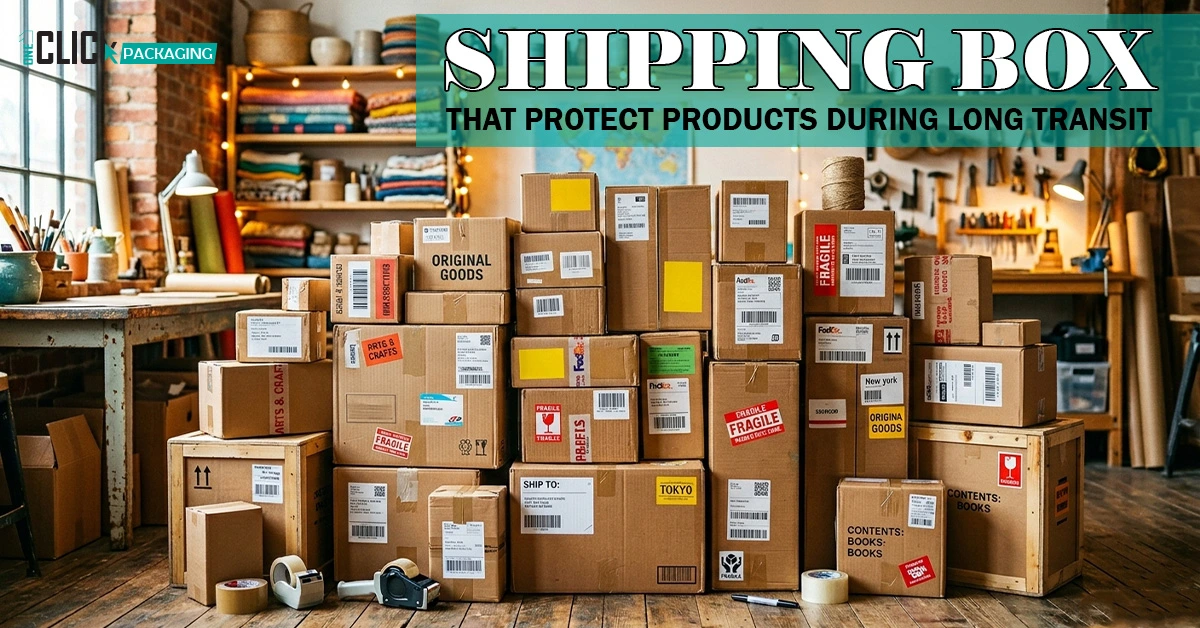
Related: Compare protection levels across box types — Shipping Boxes That Protect Products During Long Transit
4. Flat-Pack Storage Saves Warehouse Space
Mailer boxes ship and store flat, which is efficient for scaling products like custom soap boxes. A pallet of flat-packed mailer boxes takes a fraction of the space of pre-assembled boxes. For brands operating from small warehouses or 3PL facilities where storage fees are charged per cubic foot, this is a meaningful saving across a full year of operations.
5. The Unboxing Effect Drives Repeat Purchases
Here is the statistic that tends to shift brand decisions: 52% of online shoppers say they are more likely to make repeat purchases from a brand that delivers in premium packaging, according to the Packaging Digest consumer survey from late 2024. The mailer box, with its reveal-lid design and interior print surface, is built for exactly this moment.
The inside lid print is a detail that surprises and delights. Brands use it for thank-you notes, discount codes, product care instructions, or simply a bold brand statement. That interior moment costs nothing extra once the print run is set up.
What Types of Products Work Best in Mailer Boxes?
Mailer boxes work across a wide range of product categories, including apparel packaging boxes, but they shine brightest in a specific zone. Here is a practical breakdown.
| Product Category | Box Recommendation | Key Reason |
| Apparel and accessories | E-flute mailer box | Lightweight, clean print surface |
| Cosmetics and skincare | E-flute mailer box | Premium look, product visibility |
| Subscription boxes | B-flute mailer box | Multi-item protection, brand WOW factor |
| Stationery and books | E-flute mailer box | Rigid enough, low DIM weight |
| Electronics (small) | B-flute mailer box | Crush resistance, no flex |
| Food gifts and hampers | B-flute mailer box | Weight capacity, moisture resistance |
| Fragile homewares | Double-wall mailer | Maximum crush protection |
| Shoes | E-flute shoe mailer | Custom sizing available, retail ready |
Mailer Box Costs: What to Budget in 2026
Pricing depends on size, flute grade, print spec, and minimum order quantity. Here are realistic ranges based on current market data as of Q1 2026.
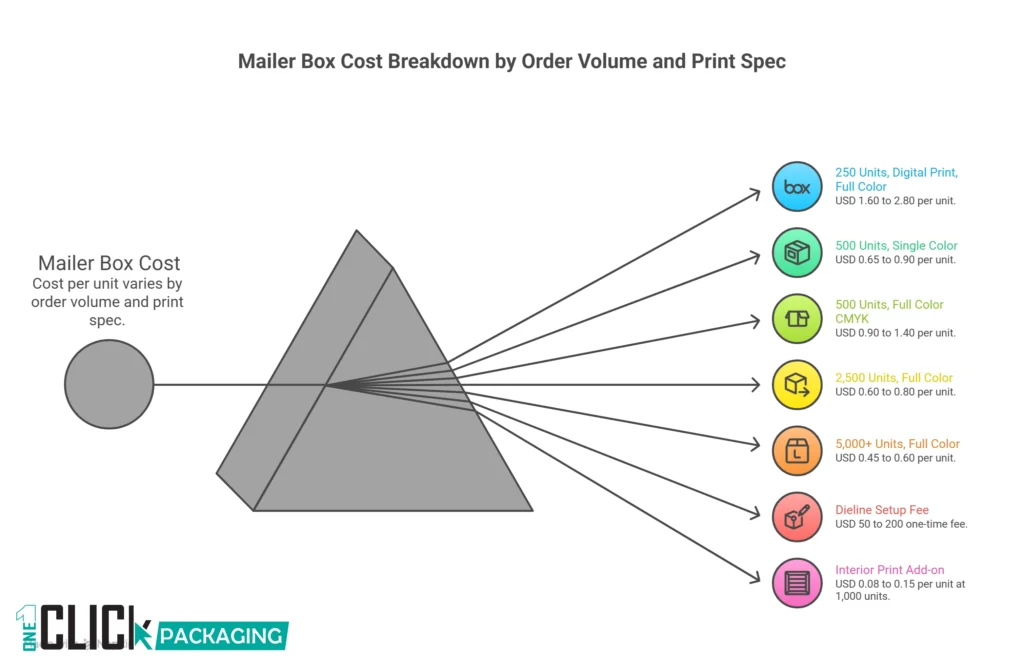
• 500-unit MOQ (single color print, E-flute): USD 0.65 to 0.90 per unit
• 500-unit MOQ (full color CMYK, E-flute): USD 0.90 to 1.40 per unit
• 250-unit MOQ via short-run digital print: USD 1.60 to 2.80 per unit
• 2,500+ units (full color, custom size): USD 0.50 to 0.75 per unit
The unit cost drops sharply at higher volumes. Brands ordering 5,000+ units from manufacturers like Packlane, Arka, or BoxUp typically land below USD 0.55 per unit on standard sizes with full-color printing.
One cost that new brands overlook is the dieline setup fee. Most suppliers charge between USD 50 and USD 200 for a custom dieline, but this is a one-time cost. Once your box is in production, reorders use the same dieline with no additional setup.
Common Mistakes Brands Make When Ordering Mailer Boxes
After watching dozens of brands go through their first custom box order, the same mistakes come up repeatedly.
Ordering the Wrong Size
A box that is too large for your product wastes material, increases DIM weight charges, and looks cheap when the customer opens it and finds a small item rattling around inside. Measure your product dimensions carefully and add 2 to 3 cm of clearance on each side for tissue paper or fill when designing custom pantyhose boxes. Do not use the factory’s standard size if it does not match your product closely.
Skipping the Physical Sample
Every supplier offers a pre-production sample or a structural prototype. Always request one before approving a full run. Color proofing on screen is not reliable. The texture, rigidity, and color accuracy of the actual box can vary significantly from what you see on a monitor.
Ignoring DIM Weight
Dimensional weight is how carriers like FedEx and UPS calculate shipping charges on larger, lighter packages. A mailer box that is even 2 cm too big in any dimension can push your parcel into the next DIM weight tier, costing you an extra USD 1 to 3 per shipment. At 1,000 shipments a month, that is a meaningful budget leak.
Using the Same Box for Every Product
One box size does not fit all your SKUs. Brands that force all products into a single box size end up either over-packing small items or under-protecting large ones. A small product line may only need two or three box sizes to cover everything cleanly.
Mailer Boxes vs. Shipping Boxes: The Honest Comparison
Both box types serve ecommerce shipping. The choice depends on your product, your brand positioning, and your order volume.
• Mailer boxes offer better branding, no tape needed, and a premium unboxing experience. They cost slightly more per unit at low volumes.
• Standard shipping boxes (RSC style) cost less at low quantities, are available everywhere including Uline and Amazon, and handle very heavy or oddly shaped items more flexibly.
• Mailer boxes win for DTC brands focused on customer experience. Shipping boxes win for high-weight, low-brand-sensitivity B2B shipments.
The honest answer: if your customers see the box, use a mailer box. If the box goes directly into a warehouse and never reaches a consumer, use a shipping box.
Final Thoughts: Is a Mailer Box Right for Your Brand?
The answer is almost always yes if you are shipping direct to consumer. The mailer box is not just a container. It is the first physical touchpoint your brand has with a customer after they click buy. That moment shapes how they feel about their purchase before they even see the product.
Brands that invest in well-designed mailer boxes consistently report higher review scores, more social sharing, and stronger repeat purchase rates. The unit cost premium over a plain shipping box is typically USD 0.40 to 0.80 at modest volumes. When measured against the lifetime value of a customer who feels delighted by their unboxing experience, that cost is negligible.
Start with a sample order. Get the size right. Print something worth photographing on the inside lid. The packaging decision that feels like a small operational detail turns out to be one of the most visible expressions of what your brand stands for when supported by the right custom packaging solutions.
What aspect of mailer box design are you thinking about for your next product launch? The structural choices, the print spec, or the sustainability angle? Each one opens a different conversation worth having.
Frequently Asked Questions About Mailer Boxes
What is the difference between a mailer box and a shipping box?
A mailer box has a self-locking lid, does not require tape, and is designed for direct-to-consumer presentation. A shipping box (RSC style) uses tape to close and is built primarily for transit durability rather than brand experience. Mailer boxes are brandable on all surfaces. Shipping boxes prioritize structural strength and lower cost at scale.
What is the minimum order quantity for custom mailer boxes?
Most custom mailer box suppliers accept minimum orders of 50 to 100 units for digital print runs and 500 units for offset or flexo printing. Short-run digital suppliers like Packhelp and Packlane offer 50-unit MOQs but at higher per-unit costs. If you need fewer than 50 boxes, stock white mailer boxes with a custom insert or sticker are a practical bridge solution.
Are mailer boxes recyclable?
Yes. Most mailer boxes are made from corrugated board that is 70 to 100% recycled content and fully recyclable curbside. E-flute and B-flute corrugated boards are accepted by standard paper recycling streams. Brands focused on sustainability should confirm their supplier uses FSC-certified board and water-based inks, which maintain recyclability without contaminating the paper stream.
How do I calculate the right mailer box size for my product?
Measure your product at its widest, longest, and tallest points. Add 25 to 35 mm to each dimension to allow for protective fill. Use those three dimensions to specify an interior box size to your supplier. Always round up to the next available size rather than down. A tight fit risks product damage. A slightly loose fit is better managed with tissue paper or kraft fill.
Can I print on the inside of a mailer box?
Yes, and this is one of the most underused branding opportunities in ecommerce packaging. The interior of a mailer box lid is a premium print surface visible the moment a customer opens their order, especially for products like custom cufflink boxes. Brands use interior printing for thank-you messages, discount codes, social media calls to action, and product storytelling. Interior print adds minimal cost to the overall box price at scale.
What flute grade should I choose for my mailer box?
E-flute is the standard choice for most ecommerce products. It prints smoothly, is lightweight, and handles products up to about 2 kg reliably. B-flute is better for heavier items, fragile products, or boxes that will be stacked in transit. Double-wall construction combines two flute layers for maximum protection and is used for premium gift boxes and fragile electronics.
How long does it take to receive custom mailer boxes?
Production timelines vary by supplier and print method. Digital short-run orders typically ship in 5 to 10 business days. Offset or flexo printing orders at higher volumes take 15 to 25 business days for production plus shipping. Always add 5 to 7 business days for ocean freight if sourcing from overseas manufacturers. Plan your first order at least 8 weeks before your launch date to allow buffer time for sample approval and any revisions.