
| Quick Answer : The best shipping boxes for long transit are double-wall corrugated (44 ECT minimum), sized with 2 inches of clearance on all sides, and sealed with pressure-sensitive tape in an H-pattern. For anything over 50 lbs or going via ocean freight, use triple-wall. The box itself not just the padding inside is your first line of protection, especially when using custom shipping packaging designed for long transit. |
A client once shipped 200 ceramic mugs from Lahore to Berlin via sea freight. Standard single-wall boxes, loose newspaper fill, 14-day route. Forty-one mugs arrived broken. The problem was not the courier. It was the box.
Most sellers think about cushioning first and the box second. That is the wrong order. A box that buckles under stack weight, collapses from moisture, or was never sized correctly will defeat even the best padding. Here is what actually matters when choosing a shipping box for long-distance transit.
Box Wall Construction: Match It to the Route
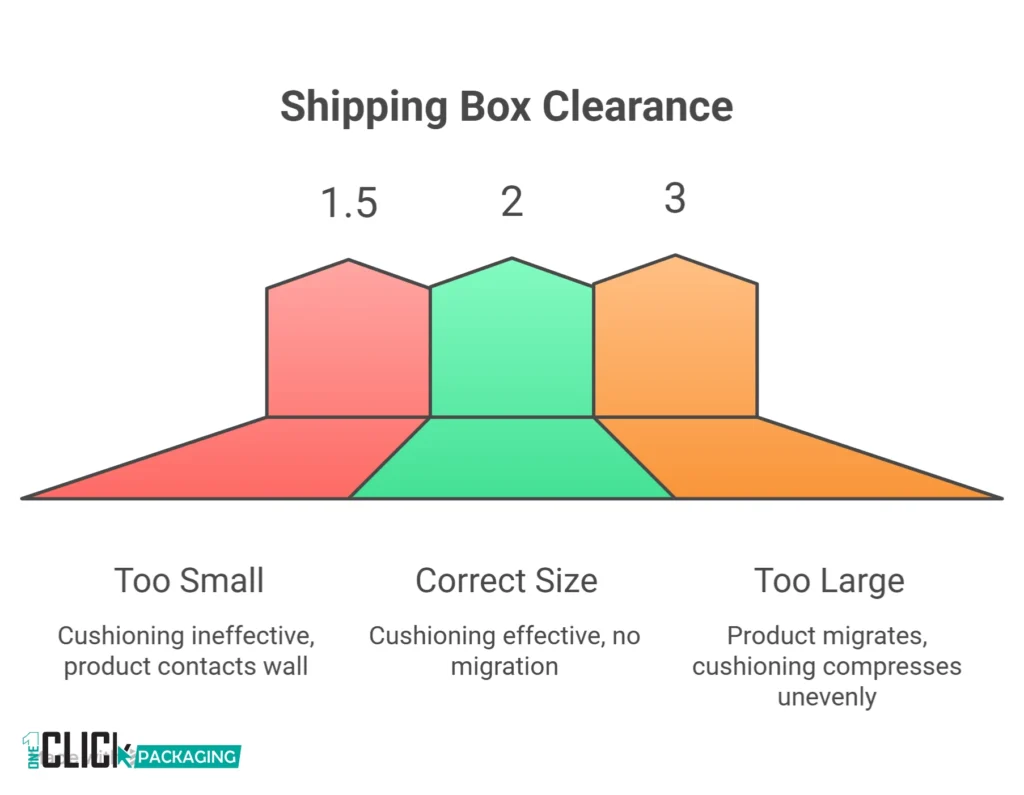
Corrugated boxes are rated by Edge Crush Test (ECT) how much vertical load the walls handle before collapsing. For short domestic routes with light products, 32 ECT single-wall C-flute is fine. For anything heavier, fragile, or crossing borders, the wall construction needs to step up, especially for electronic boxes used in international transit.
| Box Type | Best For | ECT Rating |
| Single-Wall C-Flute | Products under 20 lbs, domestic routes | 26–32 ECT |
| Double-Wall BC Flute | Electronics, ceramics, international freight | 44–61 ECT |
| Triple-Wall | Heavy goods, palletized ocean shipments | 71–82 ECT |
The most common mistake is buying boxes that look heavy-duty without checking the ECT rating, especially when sourcing Rigid Gift Boxes for premium products. Two boxes can feel identical and perform very differently under stack weight on a 10-day ocean freight route. Always ask for the ECT number.
Box Sizing: The 2-Inch Rule and Why Oversized Is Dangerous
An oversized box is nearly as risky as a weak one. When there is too much empty space inside, the product shifts during transit. Over a 14-day sea route, that movement is constant and cumulative, especially in candle packaging boxes, it compresses cushioning, stresses fragile points, and causes damage that looks random but is entirely predictable.
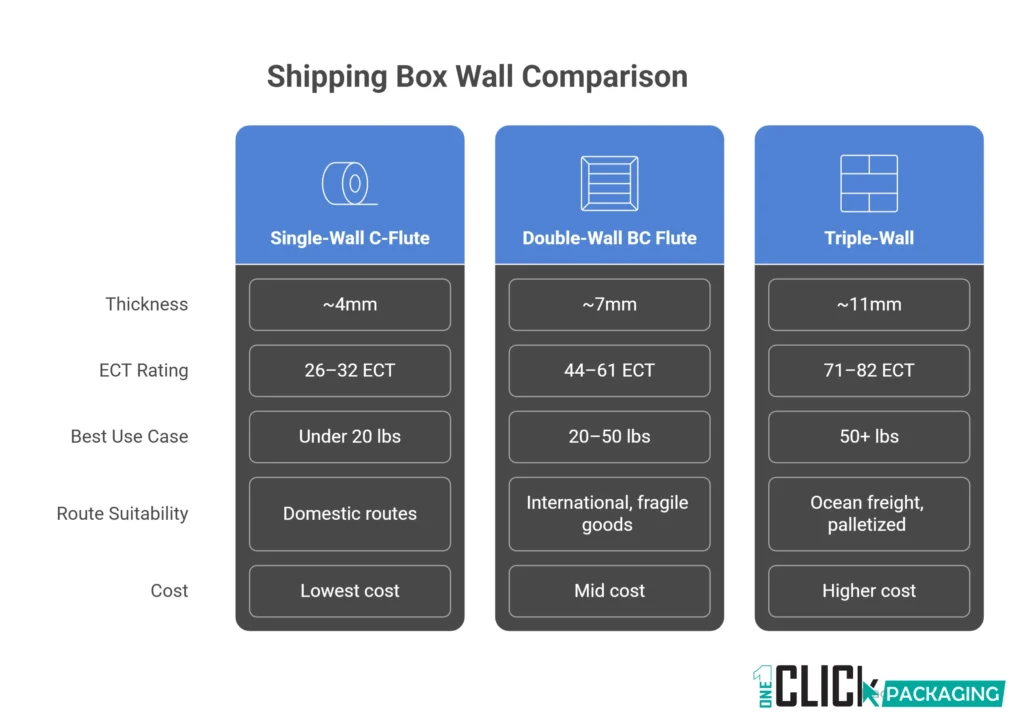
The reliable starting point is 2 inches of clearance on all six sides between the product and the box wall. Less than 1.5 inches and cushioning cannot absorb impact properly. More than 3 inches creates migration risk unless void fill is packed tightly and uniformly.
In 2026, most courier services calculate charges on dimensional weight length x width x height divided by 5,000. An oversized box costs more to ship and protects less. Sizing correctly saves money on both sides.
Interior Cushioning: Matched to the Box, Not an Afterthought
Cushioning and box construction work as a system, especially for fragile items packed in Custom Printed Perfume Boxes. The box wall absorbs and distributes the initial impact. Cushioning handles what passes through. If the box wall collapses first, no foam or air pillow inside makes a difference.
• Die-cut foam inserts hold the product in a fixed position — no migration, even on 14-day routes. Best for fragile or high-value items. Higher upfront cost, but a single damage claim costs more.
• Air pillow systems (barrier film, 2026 versions from brands like Sealed Air and Pregis) hold inflation through humidity changes better than older polyethylene types. Good for mid-weight products on routes over 7 days.
• Honeycomb kraft paper works well for products under 2 kg that are not highly fragile. Recyclable, cost-effective, and signals sustainability to customers. Not suitable for heavy or genuinely fragile items.
Sealing and Moisture: The Two Most Overlooked Factors
Corrugated cardboard loses 60 to 80 percent of its compressive strength when wet, which is critical for items packed in Honey Jar Packaging during humid transit. A box that performs perfectly in your dry warehouse can collapse in a ship container that hit humid air. For any shipment going by sea, moisture-resistant corrugated board or an inner poly liner is standard practice, not an upgrade.
For sealing, use pressure-sensitive acrylic tape at minimum 2.5 mil thickness. Apply in an H-pattern — one strip down the center seam, one strip perpendicular at each end. Boxes sealed with a single center strip regularly pop open during sorting, especially when shipping items like hat shipping boxes. Tape both the top and the base seam; bases fail more often than tops when boxes are dragged across surfaces.
| Mailer boxes solve the sealing problem differently with self-locking designs see why ecommerce brands prefer the mailer box format → Mailer Boxes Why Ecommerce Brands Prefer This Box Style |
Three Mistakes That Guarantee Damage on Long Routes
• Reusing boxes. Corrugated loses 40 to 60 percent of its compressive strength after one transit cycle. It may look fine but the internal fluting is already compromised. Never reuse boxes for outbound shipping.
• Skipping moisture protection. Standard corrugated absorbs humidity from the air. For ocean freight or shipments through tropical transit hubs, moisture-resistant board or inner poly lining is non-negotiable.
• Wrong box size. Oversized boxes with loose void fill cause more damage on long routes than slightly undersized boxes. Product migration over many days of vibration is a real and measurable risk.
The Box Is the First Decision, Not the Last
Those 41 broken mugs were not a padding problem. They were a box problem. Double-wall corrugated, individual cell dividers, moisture-resistant board total extra cost per box: roughly PKR 40. Total cost of the damage: far more than that.
Choose the right ECT rating for your product weight and route. Size the box within 2 inches of the product. Match your cushioning to the box construction. Seal every seam, including the base. Treat moisture protection as standard on any shipment going by sea.
The box your customer receives before they open the product is your packaging’s first impression, which is why choosing custom packaging boxes with logo matters. Make it one that holds.
Shipping box selection is one part of a bigger picture : SEE: how leading brands use packaging box styles to stand out: Packaging Box Styles Guide Brands Use to Stand Out
Frequently Asked Questions
| What ECT rating do I need for international shipping? |
| For products between 20 and 50 lbs on international routes, use a minimum 48 ECT double-wall corrugated box. Over 50 lbs or for palletized ocean freight, move to 71 ECT triple-wall. ECT rating determines how well the box survives stack weight in warehouses during long-distance transit. |
| Can I reuse shipping boxes for long-distance orders? |
| No. Corrugated loses 40 to 60 percent of its compressive strength after one transit cycle, even if it looks undamaged. Micro-compressions in the fluting reduce its ability to resist stack weight on subsequent shipments. Reused boxes are fine for internal warehouse transfers but not for outbound customer shipments. |
| How do I prevent moisture damage during sea freight? |
| Use moisture-resistant corrugated board, add an inner poly liner bag for sensitive products, and include silica gel desiccant packets inside the box. Also, pack boxes on the same day they ship — boxes left on humid warehouse floors absorb moisture before the shipment even starts. |
| Is double-wall corrugated always better than single-wall? |
| Not always. For lightweight products under 15 lbs on domestic routes under 5 days, quality single-wall 32 ECT performs well and costs less. Double-wall is worth the cost for heavy items, fragile products, and any route longer than 5 days or crossing international borders. |