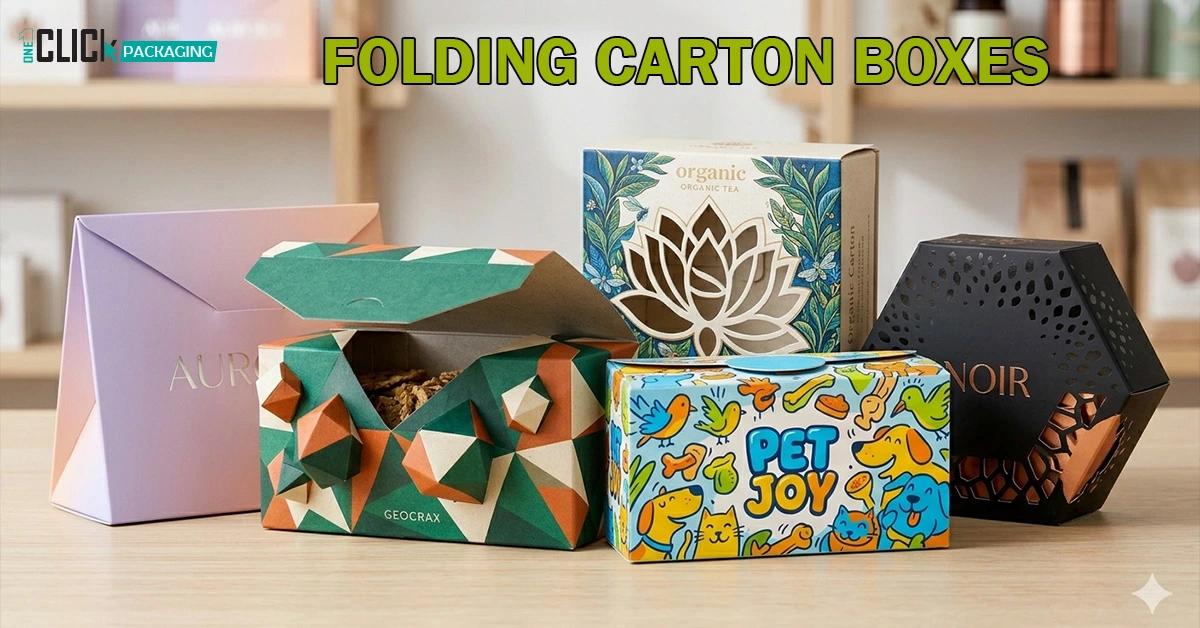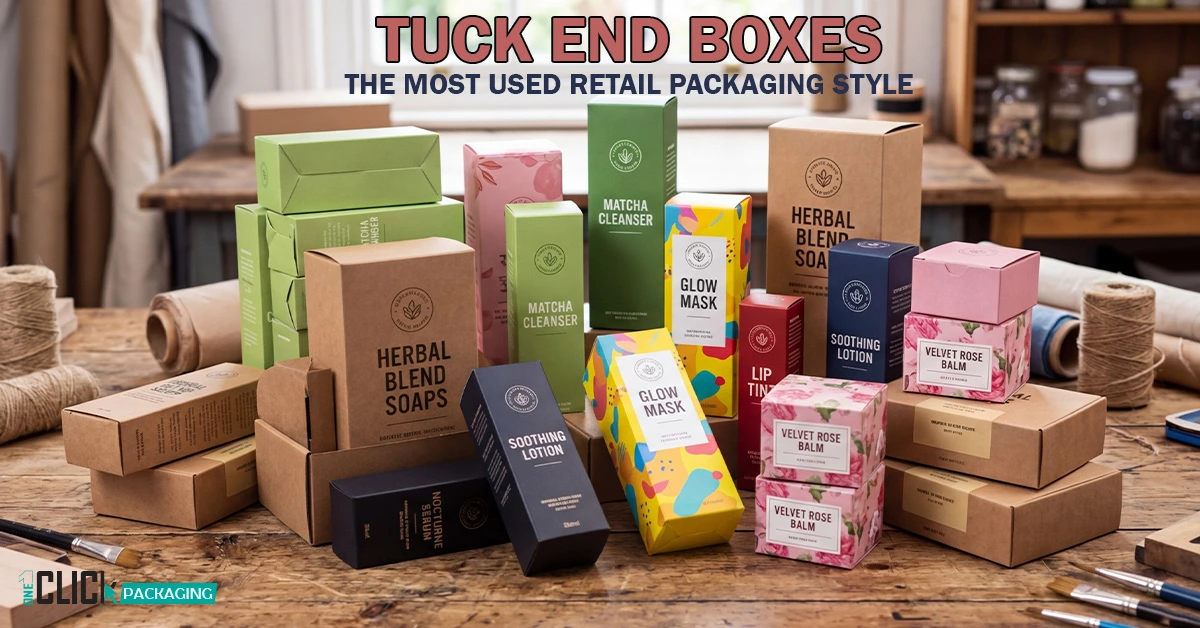

| QUICK ANSWER: Tuck end boxes are folding carton boxes where the top and bottom flaps fold inward and tuck into the box to close it — no glue, no tape needed. They are the most widely used retail packaging style because they are easy to assemble, cost-effective to produce, and endlessly customizable for printing. Brands across food, cosmetics, electronics, and pharmaceuticals use them every day. |
Why Tuck End Boxes Are Everywhere You Look
Walk into any pharmacy, grocery store, or cosmetics aisle. Pick up almost anything. Flip it over. There is a good chance the box in your hand has flaps on the top and bottom that tuck into a slot to close. That is a tuck end box. You have handled thousands of them without thinking twice about the engineering behind them.
Last year, a mid-size skincare brand I work with switched from rigid boxes to straight tuck end cartons for their new serum line. The result? Their per-unit packaging cost dropped by 38%, their assembly time at the fulfillment center was cut in half, and the boxes still looked sharp enough to sit on a Sephora shelf from a reliable packaging box supplier. That kind of outcome is not a fluke. It happens because tuck end boxes are genuinely the smartest packaging choice for most retail products.
This guide breaks down everything you need to know about tuck end boxes: the types, the differences between them, when to use each style, how they are printed, and where most brands go wrong when ordering them.
Related: [SEE → Packaging Box Styles Guide Brands Use to Stand Out]
What Are Tuck End Boxes and How Do They Work?
A tuck end box is a folding carton with a locking or tucking mechanism at both the top and the bottom. The carton ships flat, making storage easier for custom pantyhose boxes. When you are ready to use it, you fold along the pre-scored lines, tuck the top and bottom flaps inward, and the box holds its shape through friction and structure — no additional fasteners required.
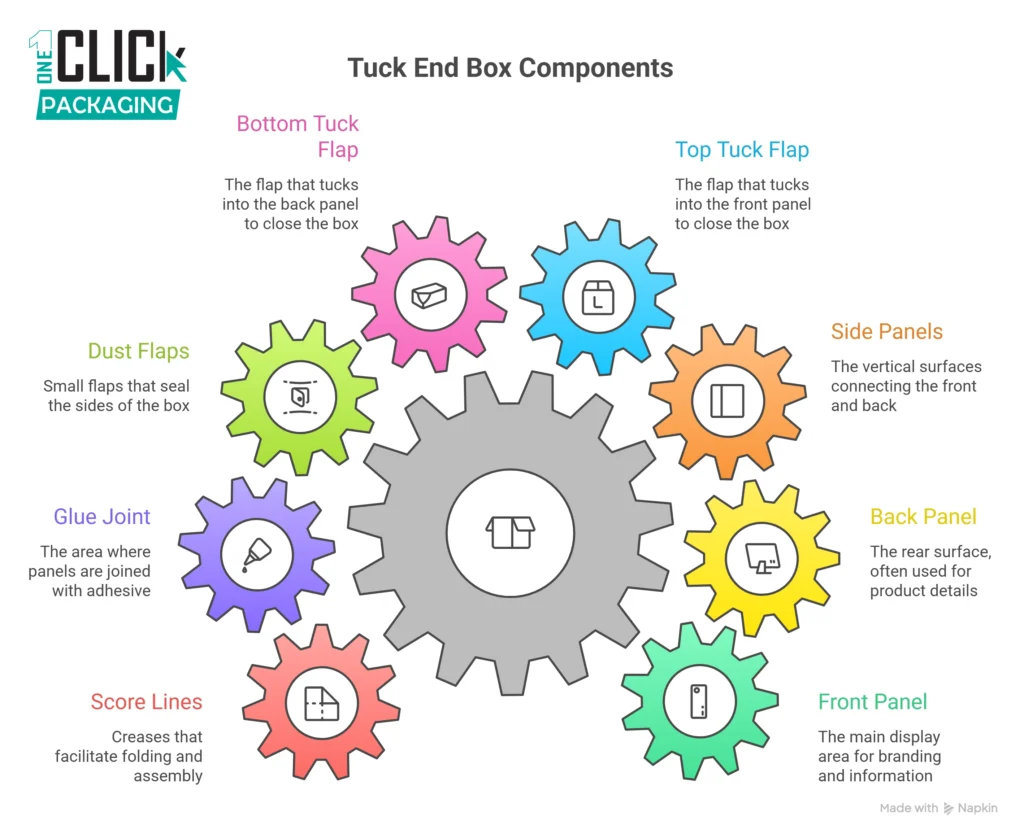
The core components of every tuck end box include: a front panel, back panel, two side panels, a top tuck flap, a bottom tuck flap, and in some styles, a dust flap that covers the open side of the tuck. The dust flap is the detail that separates the two main styles, which we will cover shortly.
The Materials That Make Tuck End Boxes Work
Most tuck end boxes are made from SBS (solid bleached sulfate) board, kraft paperboard, or coated unbleached kraft (CUK). SBS is the white, bright material you see on cosmetics and pharmaceutical boxes. Kraft gives you that natural brown finish popular in artisan food and eco-conscious brands using food packaging personalized bakery formats. The weight ranges from 14pt to 24pt depending on the product weight the box needs to hold.
Recycled paperboard is also common, particularly for brands focused on sustainable packaging. The material choice affects print quality significantly. SBS gives the sharpest color reproduction. Kraft has a warmer, more organic feel but prints at a slightly lower resolution.
Related: SEE → Folding Carton Boxes Used in Retail Product Packaging: What Every Brand Needs to Know]
Straight Tuck End vs Reverse Tuck End: What Is the Real Difference?
Here is the question I get asked more than any other: what is the difference between straight tuck end and reverse tuck end boxes? The answer is simpler than most packaging guides make it.
Straight Tuck End (STE)
On a straight tuck end box, both the top and bottom tuck flaps open from the same side of the box the front. This means when you pull both flaps open, they swing toward you. This design is popular in cosmetics, pharmaceuticals, and any product where the brand wants a clean, easy-open experience at the top.
The practical advantage of STE is that assembly on an automated packaging line is slightly faster. The box machine does not need to rotate or flip the carton between closing the top and bottom. For high-volume production runs, this saves meaningful time.
Reverse Tuck End (RTE)
On a reverse tuck end box, the top tuck flap opens from the front and the bottom tuck flap opens from the back. They open in opposite directions hence “reverse.” This design distributes stress more evenly when the box is filled and sealed. If your product has any weight to it, RTE tends to hold better in transit and on shelf.
Most consumer product brands default to RTE for exactly this reason. The stress distribution makes the box more resistant to accidental opening when stacked in warehouse conditions or during shipping.
Which One Should You Choose?
For lightweight products like single-panel cards, earbuds, or small accessories, either works fine including custom cufflink boxes. For anything over 200 grams, I recommend reverse tuck end. For premium cosmetics where the unboxing experience matters, straight tuck end often looks more intentional. For food products, check your filling method first — automated lines sometimes dictate the choice.
Straight Tuck vs Reverse Tuck: Head-to-Head Comparison
| Feature | Straight Tuck End | Reverse Tuck End |
| Opening Direction | Both flaps open from front | Top-front, Bottom-back |
| Best For | Cosmetics, pharma, light items | Heavy items, transit-heavy products |
| Automation Speed | Slightly faster | Standard |
| Stress Distribution | Concentrated at front | Distributed evenly |
| Cost Difference | Negligible | Negligible |
| Shelf Appeal | Clean front-facing look | Neutral, functional |
How Tuck End Boxes Are Printed and Finished
The packaging industry has two dominant printing methods for tuck end cartons: offset lithography and digital printing. Knowing which one to use can save you a significant amount of money and prevent quality surprises when planning a customized packaging solution.
Offset Printing for Tuck End Boxes
Offset printing uses plates to transfer ink onto the paperboard. It is the standard for runs above 500 units. The color quality is exceptional CMYK and Pantone spot colors both produce vibrant, consistent results across thousands of boxes. If your brand has specific Pantone colors (and most do), offset is how you match them reliably.
Most packaging printers in 2026 are running 6-color offset presses with inline aqueous coating. That means your boxes go from print to varnish in a single pass, which reduces production time compared to older methods. Lead times for offset tuck end boxes typically run between 10 and 21 business days depending on finishing requirements.
Digital Printing for Short Runs
Digital printing requires no plates, which makes it cost-effective for runs under 300 units such as custom tie boxes. For product launches, seasonal packaging, or regional variants, digital is the practical choice. Brands like Glossier and smaller DTC startups use digital printing heavily during their early growth phases before committing to larger offset runs.
The tradeoff is color consistency. Digital presses have improved dramatically, but for strict Pantone matching, you still get more reliable results with offset. Digital also has size limitations on most equipment, which matters if you are packaging larger products.
Finishing Options That Change Everything
The printing is only half the story. Finishing is where tuck end boxes transform from functional to memorable. The most common finishing options include:
• Gloss lamination — high-shine finish, popular in electronics and premium food
• Matte lamination — soft-touch feel, dominant in luxury cosmetics and skincare
• Soft-touch matte — premium velvet texture, costs roughly 15% more than standard matte
• Spot UV coating — glossy pattern applied over matte base for contrast effects
• Embossing and debossing — raises or recesses specific areas like logos
• Foil stamping — metallic gold, silver, or custom foil colors for premium positioning
• Aqueous coating — water-based varnish that protects without changing the visual
A word of honest advice: I have seen brands over-engineer their finishing. A matte laminated box with spot UV on the logo often outperforms a fully foiled box on perceived value for custom perfume boxes. The contrast does more visual work than the foil does on its own.
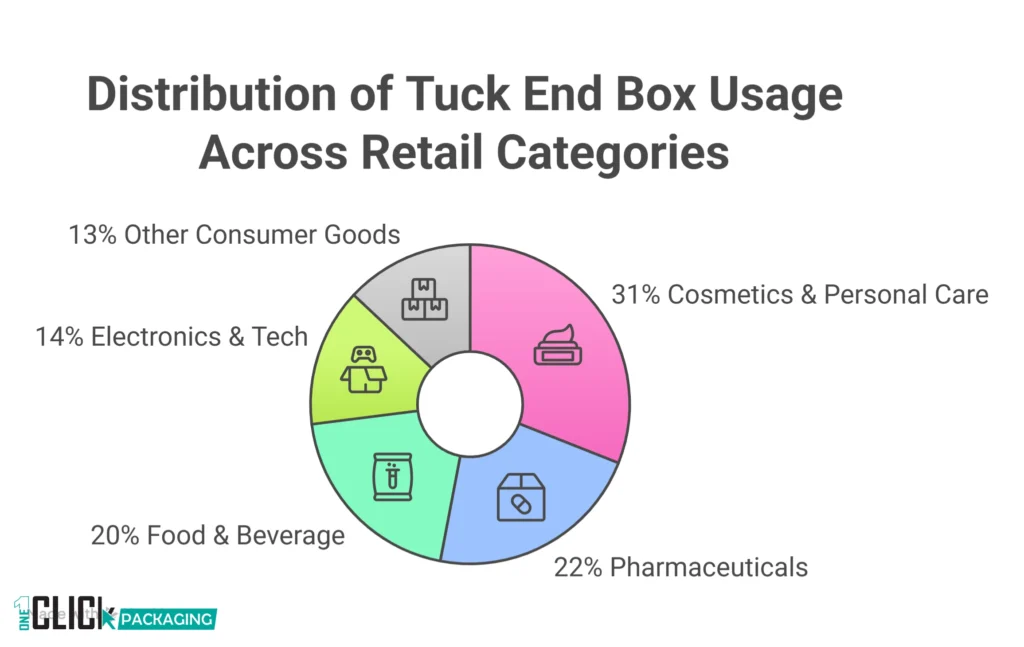
Which Industries Rely on Tuck End Boxes the Most?
Tuck end boxes are not confined to one category. They serve as the default packaging structure across more industries than most people realize.
Cosmetics and Personal Care
This is probably the largest single application. Foundation boxes, serum cartons, perfume secondary packaging, mascara cartons, and hair color kits are almost universally tuck end boxes. The ability to print high-quality images, apply premium finishes, and assemble quickly on automated lines makes tuck end cartons the clear choice.
Brands like L’Oreal, Dove, and hundreds of independent beauty brands all use tuck end boxes as their core retail structure. The cosmetics industry in the US alone accounts for billions of tuck end cartons per year.
Pharmaceuticals and Healthcare
Pharmaceutical packaging has strict requirements: tamper evidence, child-resistant features, and precise labeling areas. Tuck end boxes satisfy all of these when combined with appropriate insert cards and blister packs inside. The predictable structure also supports regulatory printing requirements.
Most OTC medications you find in a pharmacy cold medicine, allergy pills, vitamins — are packed in straight tuck end cartons within pharmaceutical packaging boxes. The straight tuck design makes it easier to add perforated tamper-evident features at the top closure.
Food and Beverage
Cereal, tea, spice blends, dry pasta, snack bars — food packaging relies heavily on tuck end structures. The key consideration here is food-grade compliance. The board and inks must meet FDA standards for indirect food contact. SBS board is the standard for this application.
For restaurants offering branded takeaway packaging or retail gift products, tuck end boxes provide flexibility in sizing that most other carton styles cannot match.
Electronics and Tech Accessories
Earbuds, phone cases, cables, chargers, and small gadgets almost universally ship in tuck end cartons similar to electronics packaging boxes. The structure provides a clean billboard for product photography and spec printing, while the assembly process integrates well with Asian manufacturing fulfillment where most electronics originate.
How to Size and Order Tuck End Boxes Without Making Expensive Mistakes
Getting the dimensions wrong is the most common and costly mistake I see brands make when ordering tuck end boxes for the first time. A box that is 3mm too wide in the width will not close properly. A box that is 5mm too short will not hold the product securely.
Understanding Internal vs External Dimensions
Always give your packaging supplier the internal dimensions of the box: the space the product needs to fit inside. The supplier calculates the external dimensions from the board thickness. If you provide external dimensions, there is a good chance your product will not fit, especially with thicker board stocks like 24pt.
The standard tolerance for tuck end box dimensions in most facilities is plus or minus 1.5mm. If your product is a tight fit in its packaging, build in at least 3mm of clearance on all sides.
Minimum Order Quantities in 2026
Most traditional offset printers set minimum orders at 500 to 1,000 units. Digital printers go as low as 50 to 100 units. For startups and small businesses, digital short runs are often the right entry point before committing to larger quantities. The cost per unit drops dramatically at 1,000, then again at 5,000, and again at 10,000.
As a rough benchmark based on current market pricing: a standard straight tuck end box in 14pt SBS, CMYK printing, matte lamination, runs approximately $0.35 to $0.65 per unit at 1,000 quantity, and $0.12 to $0.22 per unit at 10,000 quantity. These figures vary significantly based on size, finishing, and supplier location.
Structural Dieline: What It Is and Why You Need It
A dieline is the flat structural template of your box before it is folded. Your designer needs the correct dieline from your supplier before creating artwork. Using a generic template from the internet is a mistake I see constantly. Different suppliers have different panel configurations and glue tab positions. Always request the specific dieline from the facility that will print your job.
Sustainability and Tuck End Boxes in 2026
The sustainability conversation in packaging has matured significantly. Brands are no longer just asking whether their box is recyclable. They are asking about board sourcing, FSC certification, soy-based inks, and the end-of-life pathway for every component.
Tuck end boxes made from paperboard are, by their structure, one of the more sustainable packaging formats. They are flat-shipped, which reduces transportation emissions. They require no secondary packaging in most applications. They are curbside recyclable in virtually every municipality in North America and Europe.
The lamination question comes up constantly. Gloss and matte lamination films do complicate recycling. Most paper recycling facilities can process lightly laminated board, but heavily coated cartons sometimes end up in landfill. If sustainability is a core brand value, look at water-based coatings or uncoated boards with varnish-only finishes.
Several suppliers now offer FSC-certified board options at minimal cost premiums — often 5 to 8% above standard pricing. For brands selling through retailers like Whole Foods or Target that have packaging sustainability requirements, FSC certification is increasingly becoming a baseline expectation rather than a differentiator.
The Bottom Line on Tuck End Boxes
Tuck end boxes earned their status as the most used retail packaging style for a reason that has nothing to do with trend or default thinking. They work. They print beautifully. They assemble fast. They protect the product. And they scale economically from a 100-unit startup run to a 500,000-unit national launch.
The choice between straight tuck and reverse tuck comes down to your product weight and your assembly process. The choice of material and finish comes down to your brand positioning and your budget. But the choice of whether to use tuck end boxes at all? For most retail products, that decision is already made for you by about 70 years of packaging evolution.
If you are still figuring out which packaging style fits your product line, the broader context of box styles is worth exploring. The right structure is always the one that balances protection, presentation, and cost for your specific situation.
Related: [INTERNAL LINK — explore all packaging box styles brands use → Packaging Box Styles Guide Brands Use to Stand Out]
What aspect of tuck end box design is your brand currently wrestling with? Drop the details and let’s dig into the specifics.
Frequently Asked Questions About Tuck End Boxes
What is the difference between a tuck end box and a snap lock box?
A tuck end box closes by folding flaps inward into a slot. A snap lock box (also called a 1-2-3 bottom) uses interlocking flaps that snap together for a sturdier base. Snap lock boxes are used for heavier products where the bottom needs extra support. Tuck end boxes are lighter and faster to assemble but less structurally robust at the base.
Can tuck end boxes be used for food products?
Yes, but the materials must be food-grade compliant. The board and inks must meet FDA indirect food contact requirements. SBS board with soy-based or UV-cured inks is the standard combination. Always request food-grade certification from your supplier and confirm the internal coating if the food product has moisture content.
How do I add a tamper-evident feature to a tuck end box?
The most common method is a perforated tear strip at the top closure. Some brands use glued tabs with a tear notch. Others use shrink wrap over the entire carton. For pharmaceutical applications, the tuck itself can be glued shut with a breakaway seal. Discuss your specific requirement with the supplier during the dieline stage — retrofitting tamper evidence after artwork is approved adds cost.
What is the minimum quantity for custom tuck end boxes?
For digital printing, minimums start at 50 to 100 units at most specialty printers. For offset printing, 500 to 1,000 units is the typical floor. Online packaging platforms like Packola, Packlane, and Arka offer digital short runs with instant quoting. For enterprise volume above 50,000 units, working directly with a regional converter typically gives better pricing.
Are tuck end boxes recyclable?
Paperboard tuck end boxes without lamination are fully curbside recyclable. Laminated boxes can be recycled at most facilities, though heavily coated boards sometimes get sorted out depending on local infrastructure. If recyclability is important to your brand, choose uncoated board with water-based varnish and avoid plastic lamination films.
What is a dust flap on a tuck end box?
A dust flap is a narrow panel attached to the side of the tuck closure that folds inward before the main tuck flap closes. It covers the open gap on the side of the tuck closure, preventing dust, moisture, and small particles from entering the box. Pharmaceutical and food packaging almost always use dust flaps. Cosmetics brands often use them for a more premium, sealed appearance.
How long does it take to produce custom tuck end boxes?
Digital printing orders typically ship in 5 to 10 business days. Offset printing with standard finishing runs 12 to 18 business days after artwork approval. Complex finishes like foil stamping, embossing, or specialty coatings add 3 to 5 business days. Rush services are available at most suppliers for a 15 to 25% surcharge.
What file format should I use to submit artwork for tuck end boxes?
Most suppliers accept print-ready PDF files with a minimum 300 DPI resolution, 3mm bleed on all sides, and all fonts embedded or outlined. CMYK color mode is required for offset printing. If you are using Pantone spot colors, include the Pantone codes in the file notes. Always request a physical or digital proof before approving a full run.