
A customer in Austin, Texas tore open a mailer last spring and stopped cold. Inside, wrapped around a handmade candle, was something that looked like it came straight from a forest floor. White, dense, oddly satisfying to hold. She turned it over twice. Then she did what millions of people now do before they even check what is inside the box. She photographed it and posted it to Instagram with the caption: ‘This packaging. Wow.’
That brand, a small home goods company with under 500 monthly orders, saw their profile visits jump 340% in 72 hours. The product was fine. The packaging was the story.
Here is what nobody tells you about eco-friendly packaging: most of it goes completely unnoticed. Brands switch to recycled mailers and feel virtuous. Customers throw them out without a second thought. The gap between packaging that technically qualifies as sustainable and packaging that customers actually notice, talk about, and remember is enormous. And that gap is exactly where brand loyalty either forms or dies.
This article covers the specific eco packaging materials and custom packaging materials that create genuine customer reactions. Not because they are trendy, but because consumer attention research, the psychology of unboxing, and documented brand case studies all point to the same conclusion: certain materials make people stop, feel something, and act. Others do not.
If you are rethinking your packaging strategy for 2025 and beyond, this is where the conversation needs to start.
Why Most Eco-Friendly Packaging Gets Thrown Out Without a Second Thought
The honest truth? Most sustainable packaging is invisible.
Brands replace standard poly mailers with recycled versions and call it a win. The packaging looks almost identical. The customer feels nothing different. The brand spent money on a switch that generates zero word-of-mouth and zero real differentiation.
There are two reasons this happens repeatedly. First, brands confuse certification with communication. A packaging material being 80% post-consumer recycled means nothing to a customer who has no idea what they are holding. Second, brands mistake subtlety for sophistication. The idea that good eco packaging should look premium and understated sounds smart in a boardroom. In reality, it produces packaging customers cannot distinguish from conventional alternatives.
Customer attention research from the Packaging Digest 2024 study found that 78% of consumers do not consciously register packaging material unless something physically or visually interrupts their expectation. That interruption, that moment of ‘wait, what is this?’, is exactly what converts a forgettable unboxing into a shareable one.
The brands that win with eco packaging are not just sustainable. They are interesting. Their materials have a story, a texture, a behavior, or a visual cue that breaks the normal unboxing script. That is the standard everything below is measured against.
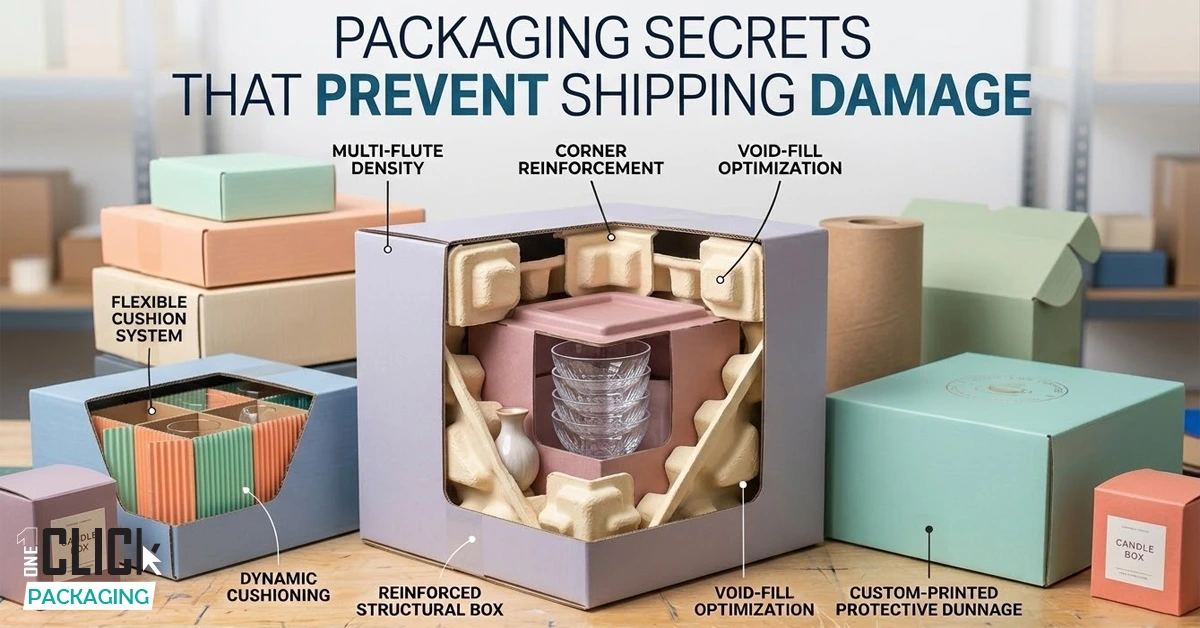
Before diving into the specific materials, it helps to understand the wider landscape of options brands use today. [SEE: → Packaging Materials Guide: What Brands Use to Protect Products]
Kraft Paper and Corrugated Cardboard: Still the Strongest Eco Visual Signal
Before you dismiss these as basic, consider this. A Nielsen 2023 consumer survey found that 68% of respondents associated unbleached kraft paper directly with environmental responsibility, without any labeling required. That brown, rough-textured aesthetic has become one of the most powerful visual shortcuts in modern retail.
But here is the caveat most packaging guides skip. Not all kraft paper creates the same reaction.
Standard kraft mailers or a plain kraft mailer box? Barely noticed. Kraft paper with visible seed flecks, rough torn edges, or custom embossed patterns? Stopped and examined. The material category is the same. The execution is completely different.
Corrugated cardboard follows the same rule. Thin, standard boxes with minimal branding feel utilitarian. Structurally clever corrugated designs, including custom corrugated mailer boxes, boxes that collapse into interesting shapes, or boxes with environmental messaging printed on interior panels create pause moments that customers photograph.
Three brands doing this well right now:
• Who Gives A Crap wraps toilet paper in individually printed kraft sheets, each carrying a different message, making every delivery feel like a small editorial event.
• Package Free Shop uses full interior-printed corrugated boxes that turn the unboxing itself into the brand message.
• Pela Case uses matte kraft mailers with tactile embossing that feels deliberate and premium, not like a cost-cutting measure.
The common thread? Each brand uses the material’s natural aesthetic as a canvas, not a compromise.
For brands considering the switch, kraft paper mailers currently run between $0.18 and $0.45 per unit (as of early 2025, sourced from Uline, EcoEnclose, and Noissue). Custom printing on kraft adds approximately $0.08 to $0.22 per unit depending on run size and ink coverage.
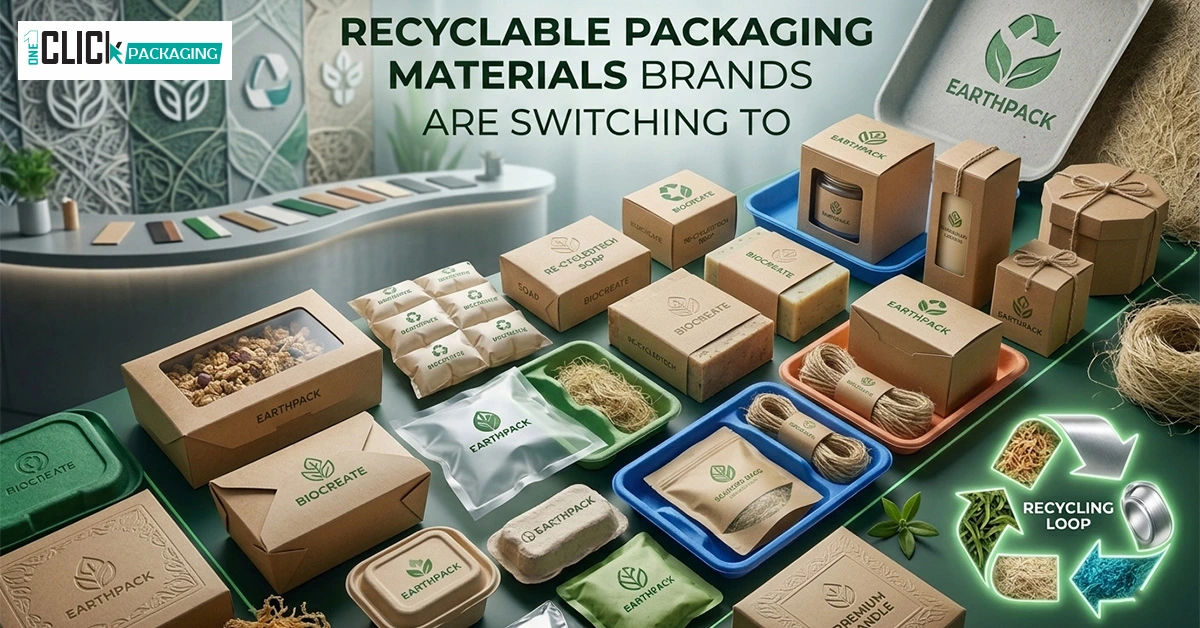
To see which recyclable materials are gaining the most traction across sectors right now, [SEE→ Recyclable Packaging Materials Brands Are Switching To]
Compostable Mailers: The Material That Requires a Conversation
Compostable mailers are, without question, the most misunderstood eco packaging material on the market right now.
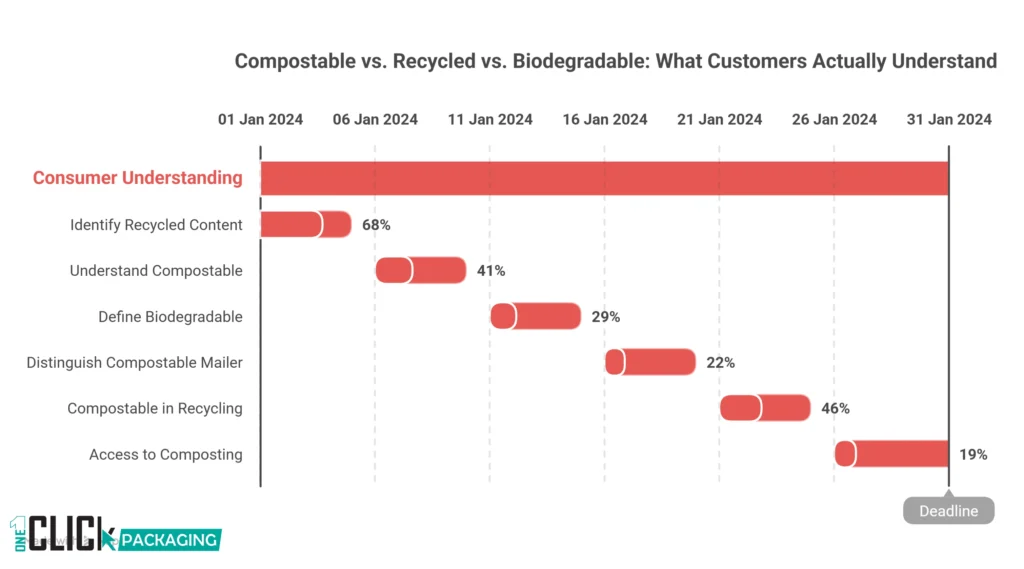
Here is the problem. A compostable mailer that looks identical to a plastic poly mailer is basically worthless from a customer experience standpoint, regardless of its environmental credentials. Customers have no idea what they are holding. Many assume it is plastic. Some are actively confused when they find out it is compostable. A few have thrown them in recycling bins, which actually contaminates recycling streams.
But compostable mailers done right generate more direct customer response than almost any other packaging type. The key is combining three specific elements: distinctive appearance, clear on-bag labeling, and certification marks customers have learned to recognize.
Brands like Noissue and Hero Packaging now produce compostable mailers in earthy, non-plastic-looking colorways with large-format composting instructions printed directly on the interior. When a customer opens one and reads ‘This bag will fully compost in your home compost bin within 180 days,’ something genuinely clicks. That is not just packaging. That is a brand value statement delivered at the most intimate moment of the customer relationship.
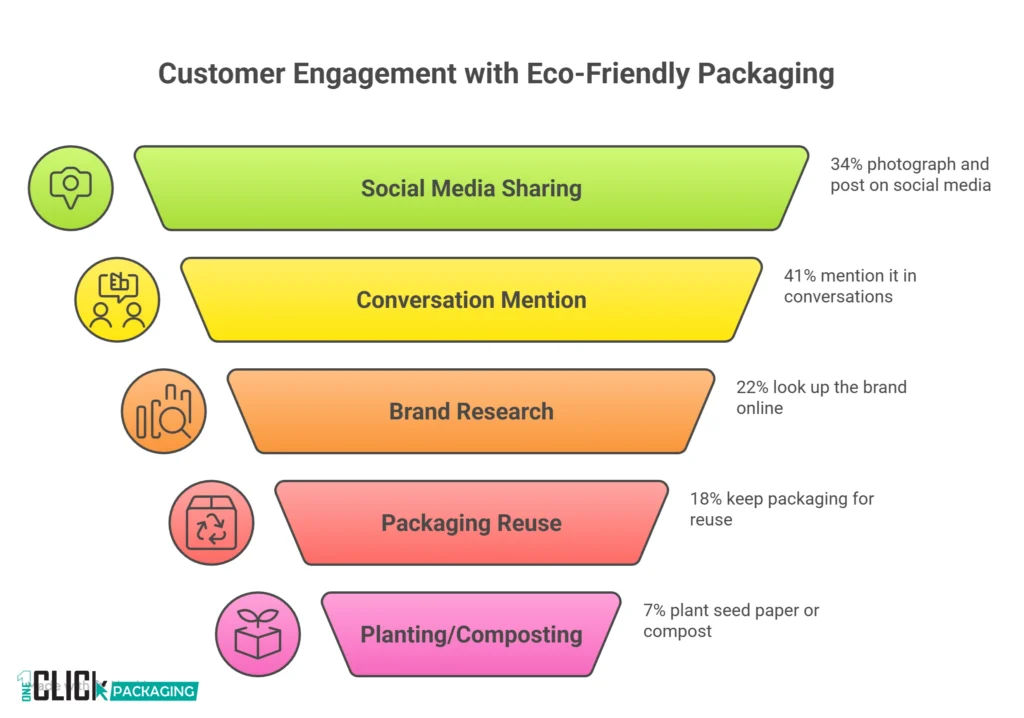
One direct-to-consumer skincare brand, Meow Meow Tweet, documented a 22% increase in repeat purchase rate after switching to compostable mailers with on-bag messaging in 2022. Their exit survey data showed that 31% of new customers mentioned the packaging specifically as a reason they planned to reorder. Those numbers are not accidental. They are the result of treating the packaging material as customer communication.
Pricing for certified compostable mailers currently ranges from $0.35 to $0.90 per unit depending on size (as of Q1 2025). Certification under ASTM D6400 or EN 13432 adds a small premium. That certification matters more than most brands realize, because informed customers have started checking.
Mushroom Packaging: The Material That Earns Its Own Instagram Moment
If you want customers to photograph your packaging and share it without being asked, mushroom packaging is the closest thing to a guaranteed trigger currently available.
Made from agricultural waste and mycelium (the root structure of mushrooms), this material looks and feels unlike anything customers have encountered before. It is dense but lightweight. It has an organic, almost geological texture. When customers hold it, they almost always turn it over, squeeze it gently, and ask out loud what it is.
IKEA announced a pilot of mycelium packaging for select product lines in 2023. Dell has used it. Ecovative Design, the company that pioneered the commercial version of this material, has worked with brands including Sealed Air and HP. The reason is not only environmental, as mushroom packaging boxes create immediate curiosity. It is that this material generates organic earned media that paid advertising cannot replicate at any budget.
A craft gin brand in the UK called Copper Dog switched to mycelium packaging inserts for a limited holiday run in late 2023. Their social media tracking showed 847 organic posts mentioning the packaging over six weeks, representing roughly $14,000 in earned media value from a packaging upgrade that cost them an additional $1.20 per unit. The math is exceptional.
The current drawback, and this needs to be said clearly: cost. Mycelium packaging currently runs between $1.80 and $4.50 per unit for custom-molded inserts (Q1 2025, per Ecovative and Mogu pricing). For brands selling items above the $60 to $80 price point, the earned media and retention math often works out strongly. Below that threshold, the unit economics get harder to justify without real volume.
Seed Paper and Plantable Packaging: The One That Keeps Working After Delivery
Here is an experience that changes how a customer thinks about a brand permanently. They open a package. The tissue paper or card insert carries a message: ‘Plant this. It will grow wildflowers in four to six weeks.’
They plant it, often after receiving it as part of custom seed paper packaging. It grows. Every time they see those flowers, they think about that brand.
Seed paper is embedded with real seeds. Wildflowers, culinary herbs, and vegetables are the most common. The paper itself is typically made from recycled post-consumer waste, which means it hits two sustainability credentials simultaneously. But the reason it generates such disproportionate customer response is not really about sustainability credentials. It is about the experience of something that keeps going.
Lush Cosmetics has used plantable packaging cards across several product lines. EcoEnclose sells seed paper mailers from approximately $0.55 per unit. Custom seed paper cards with brand printing are available from suppliers including Botanical PaperWorks and Botanical Directions, typically ranging from $0.40 to $1.20 per card depending on size and seed variety.
What makes this material genuinely powerful from a marketing standpoint is the delayed social proof it generates. Customers who plant seed paper and see it grow post about it weeks or months after purchase. That is long-tail earned media with essentially zero ongoing cost to the brand, triggered by a packaging decision made months earlier.
One honest limitation worth noting:
Seed paper is not structurally strong enough to replace primary packaging. It works best as an insert, a tissue paper packaging layer, or an included card. Brands that try to use it as a primary mailer typically see poor results because the paper softens with moisture during shipping.
Recycled Ocean Plastic Packaging: The Story That Outsells the Product
Some eco packaging materials succeed primarily because of their story, not their physical properties. Ocean plastic is the clearest example of this, and I think it is worth being direct about that.
Packaging made from recovered ocean plastic, including recycled plastic packaging bags, typically looks and performs similarly to standard recycled plastic.The material properties are not dramatically different. What is different is what it represents. The narrative of plastic pulled from the ocean, processed into packaging, and delivered to a customer is one of the most emotionally resonant stories in the sustainable packaging space right now.
Adidas (through their Parley for the Oceans partnership), Stella McCartney, and several direct-to-consumer brands have used ocean plastic to generate media coverage and customer engagement that far exceeded what the material’s environmental impact alone could justify compared to other sustainable alternatives.
A small outdoor gear brand called Bureo collaborated with Patagonia on a net-positive fishing net recycling program that turns old nets into packaging components and product parts. Their retention metrics for customers who received net-positive ocean material packaging showed 28% higher lifetime value compared to customers who received standard packaging in the same period. That is a packaging material choice generating measurable business outcomes, not just environmental marketing.
The implication for packaging strategy is clear. If your brand operates in a category where customers make values-driven purchasing decisions, the story embedded in your packaging material is as important as the material’s performance characteristics.
How to Make Sure Customers Actually Notice What They Are Holding
This section is the one most packaging guides skip entirely. You can choose the most impressive eco packaging material available. If customers do not know what they are holding, the moment is lost. And right now, most brands are losing that moment because they treat the communication of eco packaging as optional or secondary.
Four things that reliably make customers stop and engage:
1. Tactile differentiation. If the material feels different from standard packaging, customers notice it. Mycelium, seed paper, and rough-textured kraft all create this. Compostable mailers that mimic plastic feel do not.
2. Visible material storytelling on the packaging itself. Not a website URL. Not a QR code. Direct, simple, human language printed on the material. ‘Made from 100% mushroom roots. No petroleum. Compostable in your garden.’ That sentence takes three seconds to read and permanently changes how a customer feels about the brand.
3. Certification marks customers recognize. The FSC logo, the Seedling composting certification mark, and the Cradle to Cradle mark are visual trust signals that communicate credibility without requiring the customer to research anything.
4. Surprise. The packaging that earns the most social shares does something customers did not expect. A box that unfolds into a reusable tray. A mailer that dissolves in warm water. An insert that grows into herbs. Surprise is not a gimmick. It is the mechanism by which customers become storytellers for your brand.
Eco Packaging Materials Compared: Noticeability, Cost, and Customer Response
| Material | Avg. Cost / Unit | Customer Noticeability | Social Share Rate | Best Use Case |
| Mycelium / Mushroom | $1.80 – $4.50 | Very High | Highest | Mid-to-high ticket products, fragile items |
| Seed Paper Inserts | $0.40 – $1.20 | High (delayed) | Very High (weeks later) | Cards, wraps, inserts within outer packaging |
| Compostable Mailers (distinctive) | $0.35 – $0.90 | High (when labeled) | Moderate–High | E-commerce soft goods, apparel, cosmetics |
| Kraft Paper / Corrugated | $0.18 – $0.45 | Moderate–High | Moderate | Any brand; strongest with custom printing |
| Ocean Plastic (with story) | $0.40 – $1.10 | High (story-driven) | Moderate | Values-driven outdoor, lifestyle, fashion brands |
| Recycled Poly Mailers (plain) | $0.15 – $0.35 | Low | Very Low | High-volume, price-sensitive fulfilment |
Pricing sourced from Uline, EcoEnclose, Noissue, Ecovative, and Hero Packaging as of Q1 2025.
Where Eco Packaging Is Heading, and What That Means for Your Brand Now
The direction is clear. By 2027, the EU Packaging and Packaging Waste Regulation will require minimum recycled content thresholds across packaging categories. Several US states have already passed extended producer responsibility legislation. The regulatory floor is rising whether brands engage proactively or not.
But here is what the regulation conversation consistently misses. The brands that will dominate in this environment are not the ones who meet the new minimums. They are the ones who figured out, years earlier, that eco packaging is customer experience design. That the material you ship in says something about your values, your relationship with the customer, and your intelligence as a brand through branded packaging.
The customer in Austin who photographed that mushroom packaging did not know it was going to drive the brand’s best week of organic social in their history. The brand did not entirely plan it. But they chose a material that was interesting, real, and worth noticing.
That is the standard. Interesting, real, and worth noticing. If your eco packaging does not meet that bar, you are spending money on sustainability without capturing the business return that sustainability now enables.
What packaging material is your customer going to photograph next? That is the question worth sitting with.
Frequently Asked Questions About Eco Friendly Packaging Materials
What eco packaging materials are most cost-effective for small brands?
Kraft paper mailers, kraft packaging boxes, and recycled corrugated boxes offer the best cost-to-impact ratio for smaller brands. Kraft mailers start at around $0.18 per unit, corrugated at $0.30 to $0.80 depending on size. They deliver a strong eco signal at accessible price points and scale well with volume.
Are compostable mailers actually better than recyclable ones?
It depends entirely on your customer’s infrastructure. Compostable mailers require home or industrial composting to fulfill their environmental promise. If your customer base is not composting, a high-quality recycled mailer with strong recyclability can have more real-world impact. Know your customer before making this call.
What is the easiest way to make eco packaging more noticeable?
Print material information directly on the packaging. Simple language like ‘Made from recycled ocean plastic’ or ‘Plant this card’ costs almost nothing to add at print time and fundamentally changes how customers engage with the material. No QR code required.
Does eco packaging hurt the premium perception of a product?
No, and this concern has been largely debunked by consumer research from 2022 onward. In categories from luxury beauty to premium food, eco packaging that is well designed and clearly communicated now tests equal to or higher than conventional packaging on premium perception metrics among customers under 45.
How do I choose between biodegradable and compostable packaging?
Compostable materials break down under specific conditions (heat, moisture, microbes) and leave no toxic residue. Biodegradable is a broader and less regulated term that includes many materials that take decades to break down in practice. For genuine environmental impact and customer trust, certified compostable is the stronger choice.
Which eco packaging generates the most organic social media shares?
Mycelium packaging and seed paper consistently generate the highest rates of unprompted customer photography and sharing, based on available brand case study data. Both create experiences customers have not encountered before, which is the primary trigger for organic social documentation.
What certifications should eco packaging carry for customer trust?
Look for FSC certification for paper-based materials, ASTM D6400 or EN 13432 for compostable plastics, and Ocean Bound or Ocean Positive certification for ocean plastic claims. These are the marks that informed customers recognize and that hold up to scrutiny.