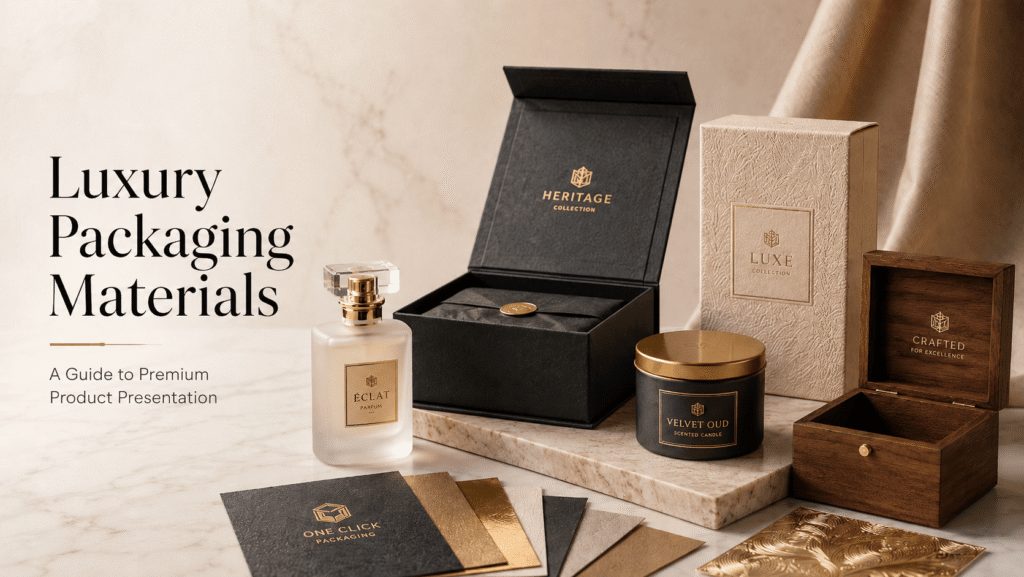
Luxury packaging materials can change how customers see, touch, and value a product before they even use it.
Think about a premium perfume displayed in a department store. A customer may already like the fragrance. However, the weight of the bottle, the smooth glass, the fitted cap, and the presentation box can influence whether the product feels worth its price.
That is why premium brands treat packaging as more than a container. The material itself sends a message.
Heavy rigid board can suggest quality. Frosted glass can communicate refinement. Metal can create a sense of permanence. Meanwhile, textured paper can make even a simple box feel carefully designed.
Choosing the right luxury packaging materials is therefore both a design decision and a business decision.
This guide explains the main materials premium brands use, where each works best, and how businesses can balance appearance, protection, cost, and sustainability.
For a wider introduction to packaging substrates, read our Packaging Materials Guide: What Brands Use to Protect Products.
Why Luxury Packaging Materials Feel Premium
There is no single material that automatically makes packaging luxurious. Instead, premium packaging comes from the way material, structure, printing, and finishing work together.
For example, kraft paper can look premium when the board has the right thickness and the printing feels intentional. On the other hand, gold foil can look cheap when the box structure feels weak.
Therefore, brands should focus on the full packaging experience.
Weight
Weight can influence how customers judge quality. A solid box usually feels more valuable than a thin carton of the same size. For this reason, premium brands often use thicker boards, heavier glass, or solid closures.
However, added weight must still make sense for shipping and product cost.
Texture
Texture creates another layer of brand experience. Uncoated paper feels different from gloss coated board. Soft touch surfaces create a different reaction from natural kraft. Likewise, embossed details encourage customers to touch the package. As a result, packaging becomes part of the product experience.
Structure
Premium packaging should also feel stable. A luxury box should open smoothly, keep its shape, and hold the product securely. Therefore, structure matters as much as surface design.
Permanence
Finally, some luxury packaging materials feel valuable because customers want to keep them. Wooden presentation boxes, decorative tins, rigid gift boxes, and premium glass containers often remain in the customer’s home long after the original product is gone.
That extended life can strengthen brand memory.
Rigid Chipboard and Greyboard for Luxury Boxes
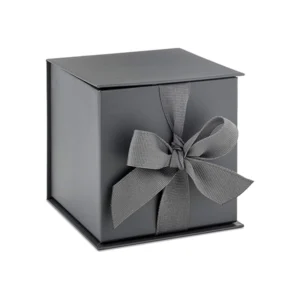
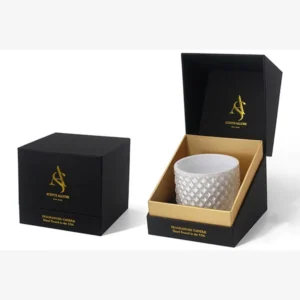
Rigid chipboard, often called greyboard, is one of the most common luxury packaging materials for premium boxes.
Unlike a standard folding carton, a rigid box holds its shape before the product goes inside. The board normally receives a printed, textured, or decorative outer wrap.
This structure creates the solid feel often associated with premium fragrances, jewelry, electronics, gifts, and fashion accessories.
Brands that want this type of presentation can also explore One Click Packaging’s custom rigid boxes.
Why Premium Brands Use Rigid Board
Rigid boxes provide several advantages.
They offer:
- Strong structural form
- Large branding surfaces
- Premium opening experiences
- Space for custom inserts
- Good presentation for gifts
- Support for foil and embossed details
- A package customers may keep
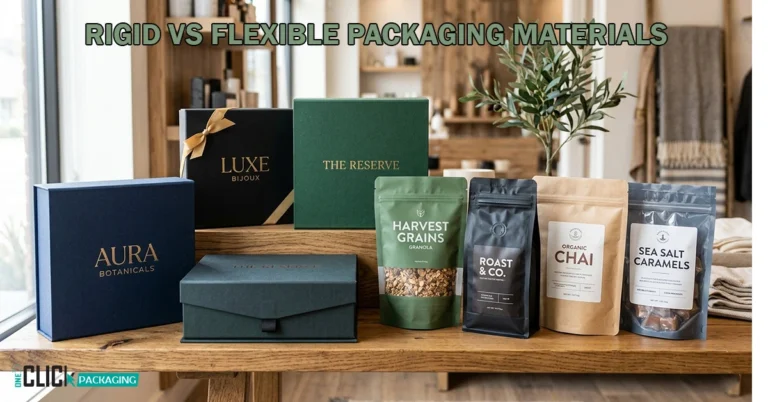
Moreover, rigid packaging works well with many surface papers and finishes. That flexibility allows brands to create very different styles from the same basic box structure.
Covering Papers for Rigid Boxes
The outer paper plays a major role in the final appearance.
Common choices include:
- Textured specialty paper
- Uncoated matte paper
- Metallic paper
- Linen style paper
- Soft-touch paper
- Kraft style paper
- Velvet effect surfaces
- Printed art paper
For example, an understated skincare brand may choose natural uncoated paper. In contrast, a luxury fragrance brand may prefer metallic details and a smoother surface.
Therefore, the covering paper should support the brand rather than compete with it.
Glass as a Luxury Packaging Material
Glass remains one of the strongest visual signals in fragrance, skincare, candles, beverages, and beauty packaging.
It offers clarity, weight, and a smooth surface. In addition, glass can support frosting, color treatments, printing, labels, and decorative caps.
A well designed glass container can make the product feel more permanent and refined.
Common Types of Premium Glass
Brands may use several glass styles.
Clear glass works well when the product itself adds visual appeal.
Frosted glass creates a softer and more modern look.
Colored glass can support brand identity while also changing how the product appears on a shelf.
Heavy wall glass adds more weight and can create a stronger luxury impression.
However, the bottle or jar should not work alone. The outer box still plays an important role in protection and presentation.
For fragrance products, see One Click Packaging’s custom printed perfume boxes.
Metal Packaging for Premium Products
Metal offers a different type of luxury.
Unlike lightweight disposable packaging, a well-made tin or aluminum container often feels reusable. Therefore, customers may keep it for storage or display.
Premium brands use metal for products such as:
- Candles
- Tea
- Coffee
- Confectionery
- Cosmetics
- Gift products
- Fragrances
- Limited editions
Aluminum Packaging
Aluminum offers a clean surface for printing and decorative finishes.
Moreover, brands can use embossing, printed coatings, and custom shapes to create a distinctive appearance.
Its lower weight can also make it useful when a brand wants a metal look without excessive shipping weight.
Tin Packaging
Tin packaging works especially well for gifts and collectible products.
A branded tin can continue promoting the business even after the original product has been used.
For example, candles and gift products often benefit from packaging customers want to reuse.
Explore related options in our custom candle packaging collection.
Wood and Natural Materials
Wood can move packaging closer to a presentation object than a disposable box.
For this reason, it appears most often in premium watches, jewelry, spirits, collector products, and high-value gifts.
Different wood finishes can communicate very different styles.
Walnut may create a traditional appearance. Maple can feel lighter and more modern. Meanwhile, bamboo can support brands that want a natural visual direction.
However, wood usually costs more to manufacture and ship.
Therefore, brands should reserve it for products where the packaging value supports the retail price.
Specialty Paper and Textured Board
Specialty paper is one of the most flexible luxury packaging materials available to growing brands.
It can change the character of a box without requiring an entirely different structure.
A textured paper can make a basic rigid box feel crafted. Likewise, colored paper can create a premium look without covering every surface in ink.
Common options include:
- Linen textures
- Natural fiber papers
- Colored papers
- Matte papers
- Embossed papers
- Recycled papers
- Metallic papers
- Soft-touch surfaces
Moreover, specialty paper works well with premium finishing methods.
Before choosing a finish, read our Luxury Packaging Finishes: Coatings, Textures and Effects That Elevate Product Value.
Foil, Embossing and Surface Finishes
The base material creates the structure. However, finishing creates another level of detail.
Premium finishing options may include:
- Foil stamping
- Embossing
- Debossing
- Spot gloss
- Matte lamination
- Soft-touch coatings
- Textured finishes
- Metallic details
- Custom printed patterns
For example, foil can draw attention to a logo without covering the entire package. Embossing can add texture without adding more colors.
As a result, small details can create a stronger premium impression.
However, brands should avoid adding every available finish at once.
Luxury packaging often works best when the design feels controlled.
Tissue Paper and Interior Presentation
The inside of the package deserves the same attention as the outside.
A customer experiences the interior after making the purchase. Therefore, this moment can reinforce the value promised by the outer box.
Interior packaging may include:
- Custom tissue paper
- Branded stickers
- Printed inserts
- Product trays
- Thank you cards
- Care cards
- Paper padding
- Fabric style liners
- Molded pulp inserts
Moreover, these details can help smaller brands create a premium experience without moving immediately into expensive wooden or metal packaging.
A rigid box, printed tissue, simple sticker, and clean insert card can create a strong result when all elements share the same visual identity.
Luxury Packaging Materials Comparison
| Material | Best Uses | Premium Strength | Sustainability Potential |
|---|---|---|---|
| Rigid board | Gifts, cosmetics, fragrance, jewelry | Strong structure and presentation | Good when paper based and responsibly sourced |
| Glass | Perfume, skincare, candles, beverages | Weight, clarity, permanence | High recycling potential where facilities exist |
| Aluminum | Personal care, gifts, beverages | Clean metallic feel and durability | Strong recycling potential |
| Tin | Tea, confectionery, candles, gifts | Reusable and collectible | Good recycling potential |
| Wood | Watches, jewelry, spirits | High-value presentation | Depends on sourcing and construction |
| Specialty paper | Boxes, wraps, inserts | Texture and color flexibility | Strong options with certified paper |
| Kraft paper | Natural products, cosmetics, gifts | Simple and tactile | Strong paper-based options |
| Molded pulp | Inserts and protective trays | Natural texture and protection | Strong paper-fiber option |
The right choice depends on the product.
Therefore, brands should not choose luxury packaging materials based on appearance alone.
Sustainable Luxury Packaging Materials
Sustainability no longer has to mean plain packaging.
Today, brands can combine premium presentation with paper-based and responsibly sourced materials.
FSC-Certified Paper and Board
Certified paper and board can support brands that want better sourcing transparency.
Moreover, these materials can still accept premium printing, foil, embossing, and other finishes.
This means brands do not always need to choose between presentation and responsible material planning.
Molded Pulp
Molded pulp works especially well for product trays and inserts.
It can hold bottles, electronics, cosmetics, and other items in place while creating a natural texture.
Additionally, molded pulp can reduce the need for certain plastic or foam inserts.
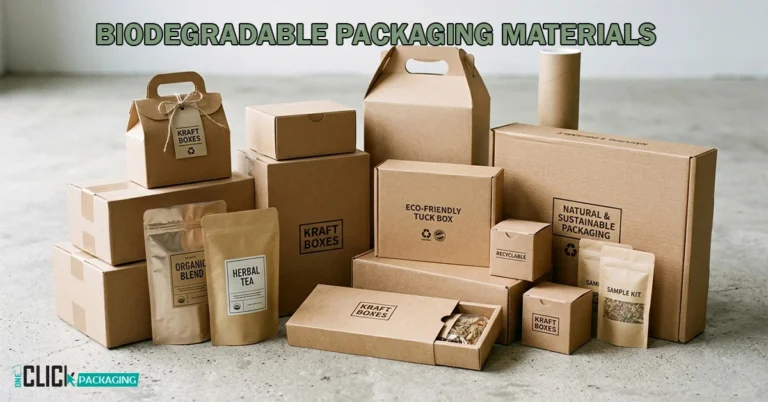
Kraft Packaging
Kraft remains popular because it communicates simplicity and natural character.
However, material selection should still match the product.
Uncoated kraft may not provide enough moisture protection for every application. Therefore, brands should discuss product requirements before choosing the final board or coating.
You can also explore One Click Packaging’s kraft packaging options.
How Premium Brands Approach Packaging Differently
Premium packaging does not begin with decoration.
It begins with strategy.
The strongest brands usually make several decisions before artwork starts.
They Create a Material Language
A brand may decide that its packaging will always use dark glass, natural paper, or a specific rigid box structure.
As a result, new products feel connected to the existing range.
They Design the Interior
Premium brands do not stop at the outside panel.
Instead, they consider the inside lid, tissue paper, insert, opening sequence, and product position.
They Use Finishes Carefully
More decoration does not always create more value.
Therefore, strong brands often use one or two signature finishing details rather than combining every available option.
They Consider Touch
Customers hold packaging.
For this reason, texture, weight, opening resistance, and surface feel deserve attention alongside graphic design.
They Match Packaging to the Product
A heavy wooden box may make sense for an expensive collector product.
However, it may feel excessive for a lightweight everyday item.
Good luxury packaging feels appropriate.
How to Choose Luxury Packaging Materials for Your Brand
Before choosing a material, answer five questions.
What are you packaging?
Start with the product’s weight, size, shape, and fragility.
A glass bottle needs different protection from a silk garment.
Where will customers buy it?
Retail packaging must compete on a shelf.
Meanwhile, ecommerce packaging must also survive shipping.
What should the brand feel like?
Define the message before choosing the material.
Should the brand feel modern, natural, traditional, bold, minimal, or highly decorative?
What is your realistic budget?
Premium packaging should support margins rather than destroy them.
Therefore, compare the full packaging system instead of focusing on one box.
What happens after use?
Finally, consider whether customers will recycle, reuse, store, or discard the packaging.
This can influence both material choice and brand perception.
Build a Luxury Packaging System Around Your Product
The best luxury packaging materials do more than look expensive.
They protect the product, support the brand, and make the customer experience feel intentional.
Rigid board can create structure. Glass adds weight and clarity. Metal can create permanence. Wood can turn packaging into a keepsake. Meanwhile, specialty paper and premium finishes can create luxury without requiring the highest material budget.
The key is consistency.
Your material, printing, finish, insert, and product should feel like parts of the same idea.
If you are planning a premium packaging project, One Click Packaging can help you compare materials, structures, printing options, and finishes.
Request a custom packaging quote with your required dimensions, quantity, material preferences, and artwork.
You can also book a packaging consultation with One Click Packaging to discuss your project directly.
Frequently Asked Questions
What are luxury packaging materials?
Luxury packaging materials are premium substrates and structures used to improve product presentation, protection, and customer experience. Common examples include rigid board, glass, metal, wood, specialty paper, and premium paper-based materials.
What is the most common material for luxury boxes?
Rigid board is one of the most common choices for premium presentation boxes. It provides a solid structure and supports many printing, wrapping, and finishing options.
Are sustainable luxury packaging materials available?
Yes. Brands can consider certified paperboard, recycled paper, kraft, molded pulp, glass, metal, and other materials based on the product and local recycling systems.
Is glass better than plastic for luxury packaging?
Glass often feels heavier and more permanent. Therefore, fragrance, skincare, candle, and beverage brands frequently use it for premium products. However, the best material depends on protection, shipping, cost, and product requirements.
Can small brands use luxury packaging?
Yes. Small brands do not always need expensive wooden boxes or custom glass molds. Specialty paper, custom rigid boxes, tissue paper, branded stickers, inserts, and simple premium finishes can create a strong presentation.
What finishes make packaging look premium?
Popular options include foil stamping, embossing, debossing, matte finishes, spot gloss, soft-touch surfaces, and textured papers. However, careful use usually creates a more refined result than using too many finishes together.
What luxury packaging works well for jewelry?
Rigid jewelry boxes with fitted inserts work well for rings, necklaces, bracelets, watches, and other small premium products. Explore One Click Packaging’s custom jewelry boxes for related formats.
How do I choose between rigid board and corrugated packaging?
Use rigid board when presentation is the main goal. Use corrugated packaging when shipping strength is more important. For ecommerce luxury products, brands often use a premium retail box inside a protective shipping carton.
Should luxury packaging be reusable?
It does not have to be. However, reusable packaging can extend the customer experience. Tins, wooden boxes, rigid gift boxes, and decorative containers often remain useful after the original product is removed.
Where can I get help choosing luxury packaging materials?
One Click Packaging can help businesses compare materials, sizes, box structures, printing, and finishing options before production. Request a custom quote or book a packaging consultation to discuss your project.