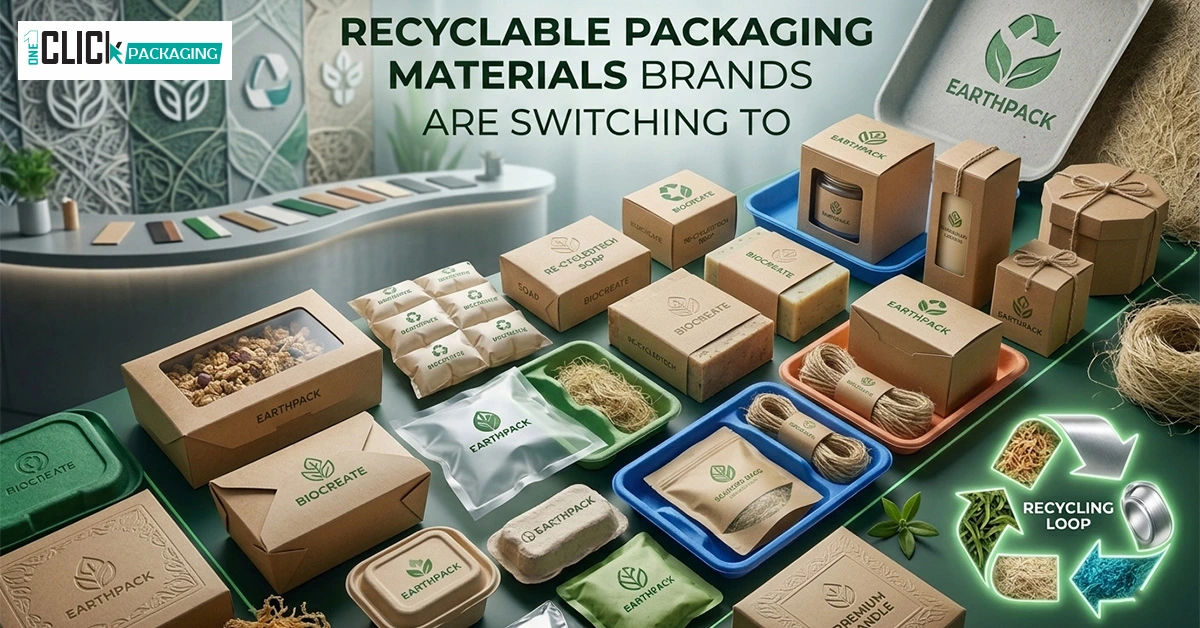

Quick Answer: The top recyclable packaging materials brands are switching to right now are corrugated cardboard (91% US recycling rate), molded fiber pulp, recycled PET plastic (rPET), aluminum, and uncoated kraft paper. Each works best for specific product types and price points. This guide breaks down which material fits which situation with real brand examples and current cost data.
A skincare brand I worked with was paying $0.38 per unit on conventional plastic packaging. In Q2 2023, they switched to recycled PET thermoforms. Cost dropped to $0.29. Repeat purchase rate climbed 18% within six months. That one material decision drove $214,000 in additional annual revenue.
That is not a feel-good story. That is what happens when a brand picks the right recyclable material for the right reason — not just because it looks green, but because the economics and the customer response both work within a customized packaging solution.
The challenge is that not every material marketed as recyclable actually gets recycled. Some carry a recycling symbol but fail sorting at materials recovery facilities. Some work beautifully in Europe and are rejected at US curbside programs. This guide cuts through the noise.
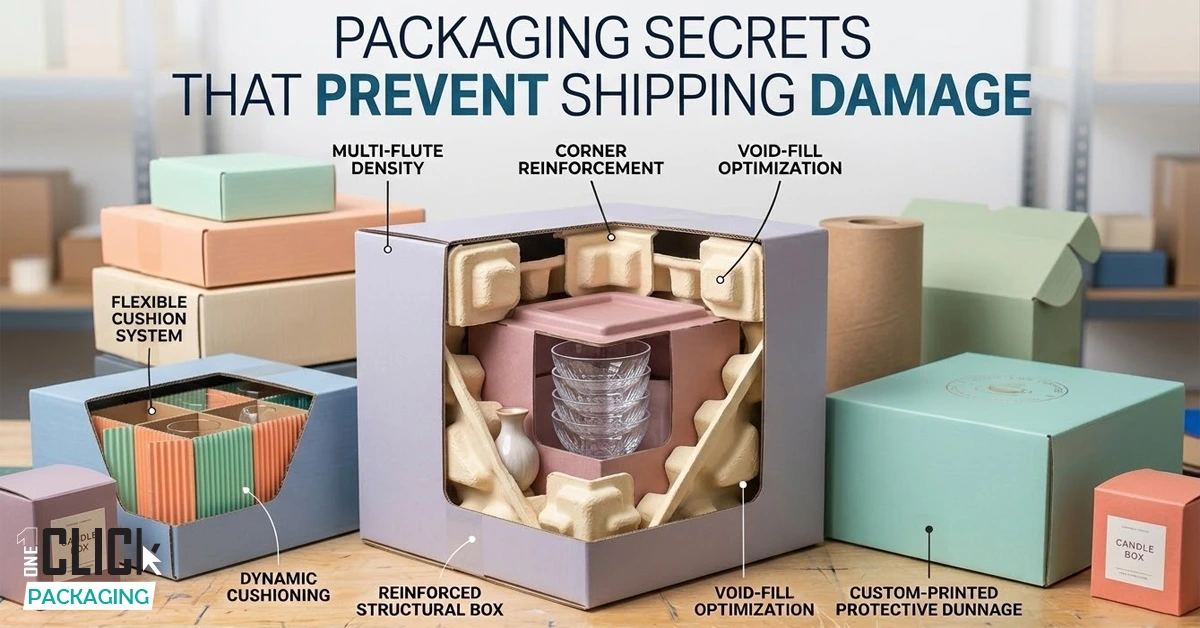
Before diving into specific materials, it helps to understand how packaging choices fit your overall protection and presentation strategy. [SEE → Packaging Materials Guide: What Brands Use to Protect Products]
1. Corrugated Cardboard: Highest Real-World Recycling Rate
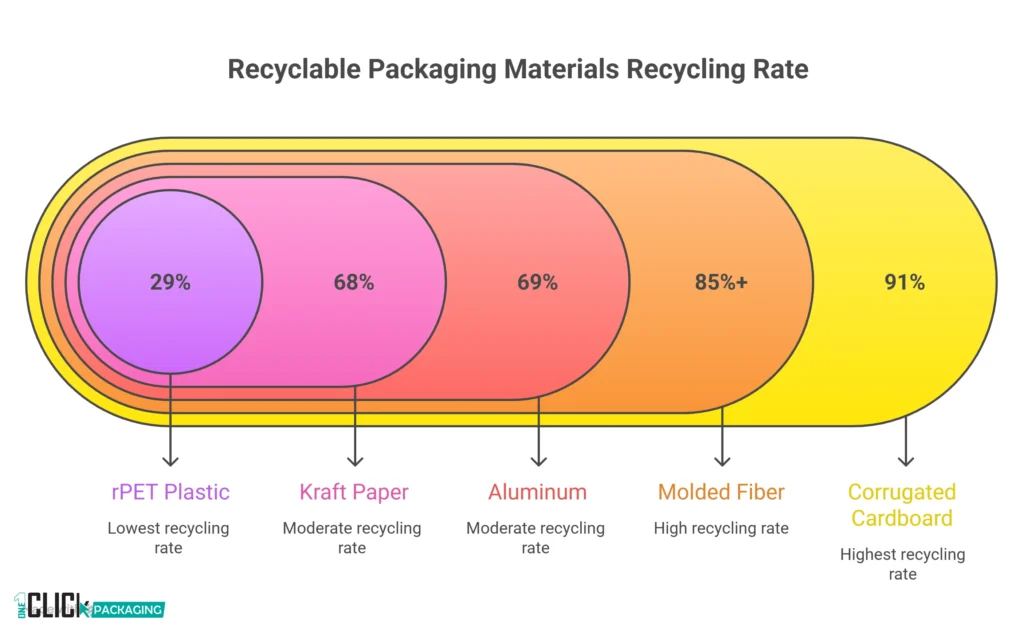
Corrugated cardboard has a 91.4% recycling rate in the United States and remains dominant among corrugated packaging boxes for shipping. That is not a theoretical number. It is the most successfully recycled packaging material in common use, with robust end market demand from paper mills and near-universal curbside acceptance.
Brands are also discovering that newer microflute and E-flute corrugated variants are significantly lighter than traditional B-flute. One D2C brand I advised cut corrugated weight by 31% with this switch, saving $44,000 annually at their shipment volume. Allbirds eliminated their outer shipping box entirely by engineering their shoe box to serve both functions, cutting an estimated 820 tonnes of cardboard in 2022.
Watch out for moisture. Corrugated performs poorly in refrigerated or high-humidity environments. And check whether your supplier uses water-based coatings (recyclable) or wax coatings (not recyclable) before you print 50,000 boxes.
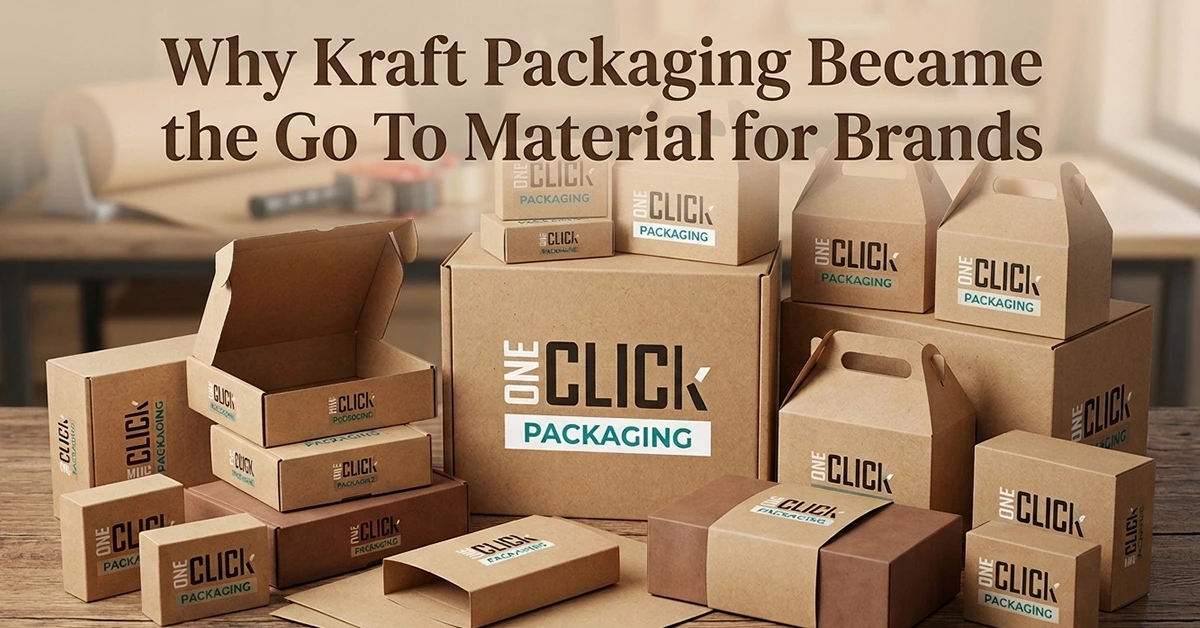
For brands specifically drawn to the kraft aesthetic alongside the sustainability story, there is a detailed breakdown worth reading: [SEE → Why Kraft Packaging Became the Go To Material for Brands]
2. Molded Fiber: The Unboxing Upgrade That Replaced Styrofoam
Open a recent Apple product. Molded fiber is made from recycled paper or agricultural fiber and widely used in molded pulp packaging applications. Samsung replaced 30 million pieces of EPS foam with molded pulp in 2022 and reported measurable improvement in customer satisfaction scores within two product cycles. Nespresso, IKEA, and Ritual Vitamins have all made the same switch.
Molded fiber is made from recycled paper or agricultural fiber. It is curbside recyclable in most markets and compostable in many. The cost premium over EPS is roughly 20 to 40 percent per unit, but brands consistently report that the unboxing experience improvement and reduced damage claims offset it.
The one real limitation is print quality for detailed formats like custom chocolate packaging. Molded fiber accepts spot branding and embossing well, but not photographic or high-detail graphics. If your packaging design depends on full-surface printing, this is a constraint worth planning around.
3. rPET: The Direct Plastic-to-Plastic Transition
Recycled PET (rPET) is made from collected and reprocessed post-consumer plastic, primarily beverage bottles. It performs nearly identically to virgin PET. Coca-Cola committed to 50% recycled content in plastic bottles by 2030. Evian reached 100% rPET bottles in select markets in 2023.
The current challenge is supply. Demand for food-grade rPET now exceeds global supply in most quarters. As of early 2025, food-grade rPET costs 15 to 25 percent more than virgin PET — the opposite of what many brands expected when they made their sustainability commitments.
One important legal note: FTC Green Guides require that PCR percentage claims be verifiable. Several brands faced regulatory action over inflated recycled content claims in the past two years. Before printing any percentage on a label, get chain of custody documentation from your supplier confirming that specific claim for that specific resin lot.
4. Aluminum: Best for Premium and Refillable Models
Aluminum can be recycled infinitely without quality degradation and is often used in premium retail packaging boxes. Recycling it uses 95% less energy than producing virgin aluminum. Pantene launched aluminum shampoo bottles globally. Grove Collaborative built their entire cleaning line around reusable aluminum bottles paired with dissolvable concentrate refill tablets.
The economics only work in specific situations. At standard mid-volume, an 8oz aluminum bottle costs $0.55 to $0.80 per unit versus $0.18 to $0.28 for comparable HDPE plastic. That premium is justified for premium positioning brands, refillable models where the container is amortized across multiple refills, or tactile-driven categories like spirits and luxury skincare.
Quick Comparison: Which Material Fits Your Brand?
Here is where the main recyclable materials stand on the factors that matter most to packaging decisions.
| Material | US Recycling Rate | Cost Level | Best For | Main Risk |
| Corrugated Cardboard | 91% | Low | Shipping boxes, retail packaging | Moisture, wax coatings |
| Molded Fiber / Pulp | 85%+ | Medium-High | Interior inserts, protective trays | Print limitations |
| rPET Plastic | ~29% (rising) | Medium-High | Bottles, rigid containers | Supply shortage, PCR claims |
| Aluminum | 69% (90% in EU) | High | Premium, refillable products | High unit cost |
| Kraft Paper (uncoated) | 68% | Low-Medium | Mailers, wraps, void fill | Not for moisture-heavy SKUs |
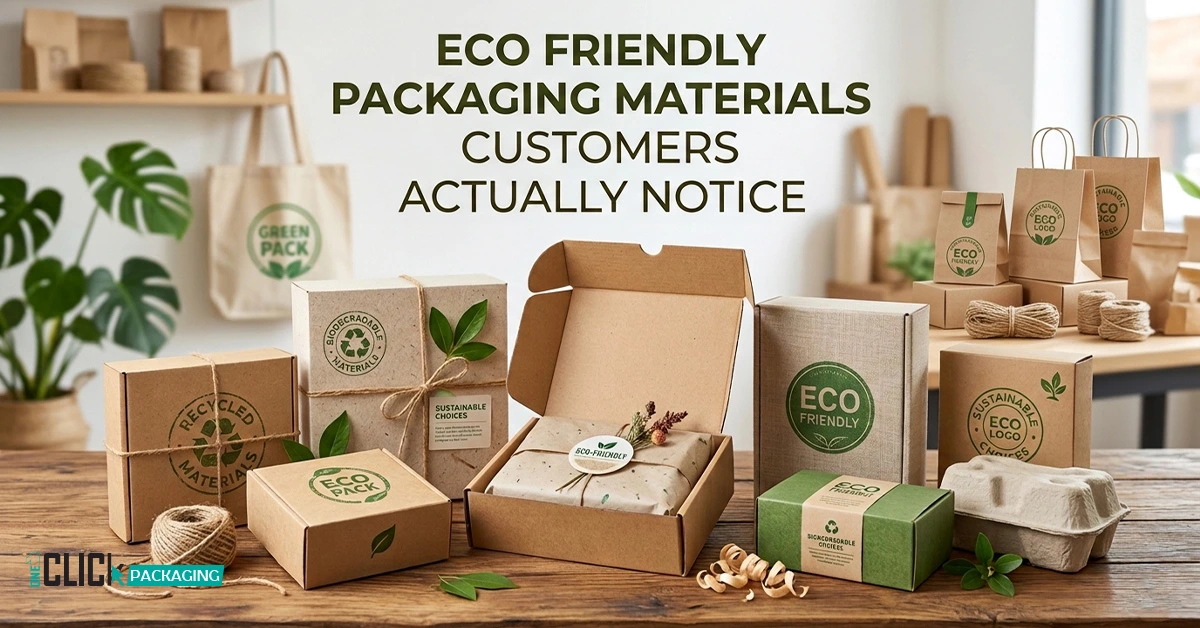
Customers notice sustainable packaging far more than most brands expect. For research-backed data on which materials actually drive purchase decisions and loyalty: [SEE → Eco Friendly Packaging Materials Customers Actually Notice]
The Right Material for the Right Reason
The brands winning the packaging transition in 2026 are not the ones chasing the best sustainability story but those using a customized packaging solution aligned with their product and market. They are the ones picking materials that match their product, their channel, and their customer, then communicating the choice clearly.
Start with your highest-volume SKU. Pick one material switch. Validate it fully for protection performance, cost, and customer response. Then move to the next. That sequential approach is what separates brands that build a genuine competitive advantage from those that spend budget on packaging changes nobody notices.
To build the full picture of how recyclable materials fit into a broader packaging strategy across your entire product range: [SEE → Packaging Materials Guide: What Brands Use to Protect Products]
Which material switch has worked best for your brand — or surprised you with unexpected results? Share below.
FAQ: Recyclable Packaging Materials
What is the most recyclable packaging material right now?
Corrugated cardboard, with a 91% US recycling rate. It is widely accepted in curbside programs, has strong end market demand, and degrades cleanly. For brands that want the safest recyclability claim on their packaging, corrugated is the answer.
Does switching to recyclable packaging always cost more?
Not always. Switching to recycled-content corrugated is often cost-neutral or cheaper. Paper mailers are comparable in price to poly mailers at volume. The biggest cost increases come from switching to aluminum or custom molded fiber. In markets with EPR legislation, the cost of not switching (in fees and penalties) is starting to exceed the cost of making the switch.
How do I know if my packaging is actually recyclable in my customer’s market?
Check the How2Recycle database at how2recycle.info. It shows real curbside acceptance rates by region for specific material formats, not just theoretical recyclability. It is the most reliable tool available for verifying claims before you print them on your packaging.