
A small tea brand switched from white folding cartons to plain kraft bags in early 2024. No rebrand. No marketing push. Their unboxing posts on Instagram went up 60 percent in three months. Their packaging cost dropped from $0.90 to $0.35 per unit. That is not a coincidence. That is kraft doing what it has always done delivering more than its price suggests.
This supporting guide explains exactly why brands across food, beauty, and e-commerce keep coming back to kraft among other custom packaging materials, what it costs in 2026, and where it genuinely falls short.
For a full breakdown of all packaging materials brands use today, start here. [See: Packaging Materials Guide: What Brands Use to Protect Products]
What Makes Kraft Paper Structurally Different
Kraft paper is not just brown paper. The name comes from the German word for strength, and it earns that. The sulfate-based kraft process keeps cellulose fibers long and intact — roughly 3 to 4mm in softwood pulp. Shorter-fiber papers crack under folding. Kraft flexes.
That fiber length gives kraft its real advantage: high tear resistance and burst strength at a lighter weight. For brands shipping physical products, that means fewer damaged deliveries. For brands designing kraft packaging boxes, it means the material holds a clean crease without splitting.
There are two main forms:
• Natural (unbleached) kraft — stronger, cheaper, better eco story, warm brown tone
• Bleached kraft white surface, handles full-color CMYK printing precisely, costs 15–25% more
If your design uses 2 to 4 spot colors or a logo stamp, natural kraft works well. If photographic imagery matters, go bleached.
Why Sustainability Pressure Made Kraft the Default
Consumer behavior shifted fast. A 2023 McKinsey survey found 78 percent of US shoppers say a sustainable lifestyle is important to them. By 2026, that preference has moved into purchase behavior. Customers no longer reward eco-friendly packaging. They penalize non-eco packaging.
Uncoated, unlined natural kraft is genuinely clean. It biodegrades in home compost in 2 to 6 weeks. FSC-certified kraft uses responsibly managed softwood forests. Compared to plastic packaging — which takes 400+ years to break down — the difference is not marginal.
Important: Kraft laminated with petroleum-based film is not compostable. It can contaminate recycling streams. The eco story only holds for unlined or PLA-lined kraft used in biodegradable packaging for food.
Before making sustainability claims on your packaging, check what recyclability certifications actually mean.
What Kraft Packaging Actually Costs in 2026
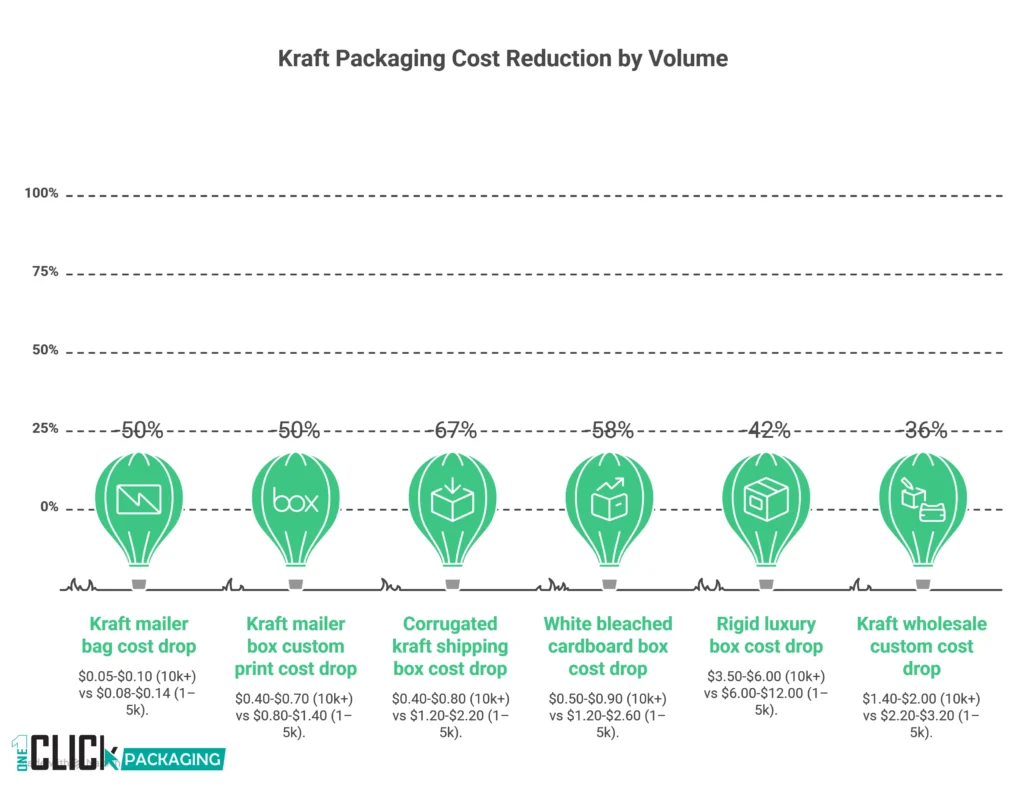
Containerboard prices dipped unexpectedly in February 2026 — a $20/ton drop noted by Fastmarkets RISI — after major producers had announced price increases for March. That gives buyers some negotiating leverage right now, especially on corrugated kraft orders. Here are realistic per-unit ranges based on supplier data from packaging box manufacturers as of Q1 2026:
| Format | 10,000+ units | 1,000–5,000 units | Best For |
| Kraft mailer bag (plain) | $0.05–$0.10 | $0.08–$0.14 | Basic, scalable |
| Kraft mailer box (custom print) | $0.40–$0.70 | $0.80–$1.40 | E-commerce core |
| Corrugated kraft shipping box | $0.40–$0.80 | $1.20–$2.20 | Heavy goods, FBA |
| White bleached cardboard box | $0.50–$0.90 | $1.20–$2.60 | Retail shelf |
| Rigid luxury box | $3.50–$6.00 | $6.00–$12.00 | Premium gifting |
| Kraft wholesale (custom) | $1.40–$2.00 | $2.20–$3.20 | Wholesale branded |
Sources: CustomBoxMakers, YoursPackaging, Lussopack supplier data Q1 2026. Prices vary by region, print method, and order volume.
One pattern holds across all formats: a 10,000-unit order is 40 to 65 percent cheaper per unit than a 1,000-unit run. Setup and plate costs get amortized. If you are testing a new SKU, budget for higher unit costs at low volumes. Do not set your retail margin based on future-volume pricing until you hit that volume.
The Two Industries That Adopted Kraft Fastest
E-commerce brands
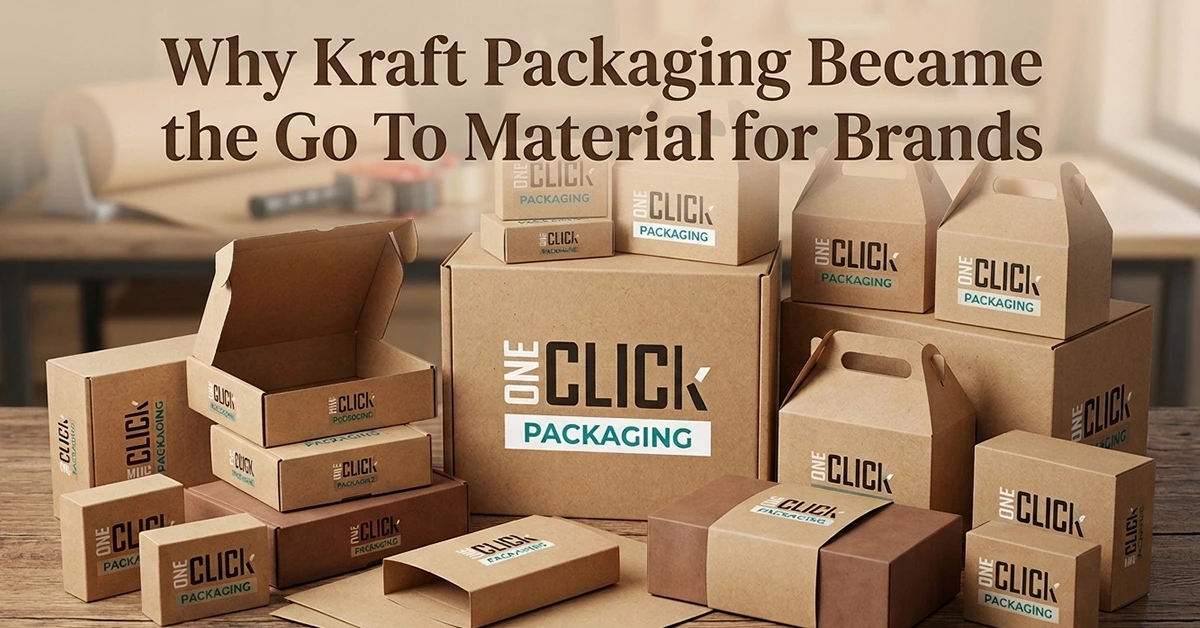
Since around 2017, the kraft mailer, especially kraft mailer boxes, has become a visual shorthand for quality DTC brands. Brands like Girlfriend Collective and Grove Collaborative used natural kraft packaging before it was a trend — and the trend followed them. The unboxing aesthetic photographs well without studio lighting. The contrast of a white logo on natural brown is clean and premium without requiring gloss laminate.
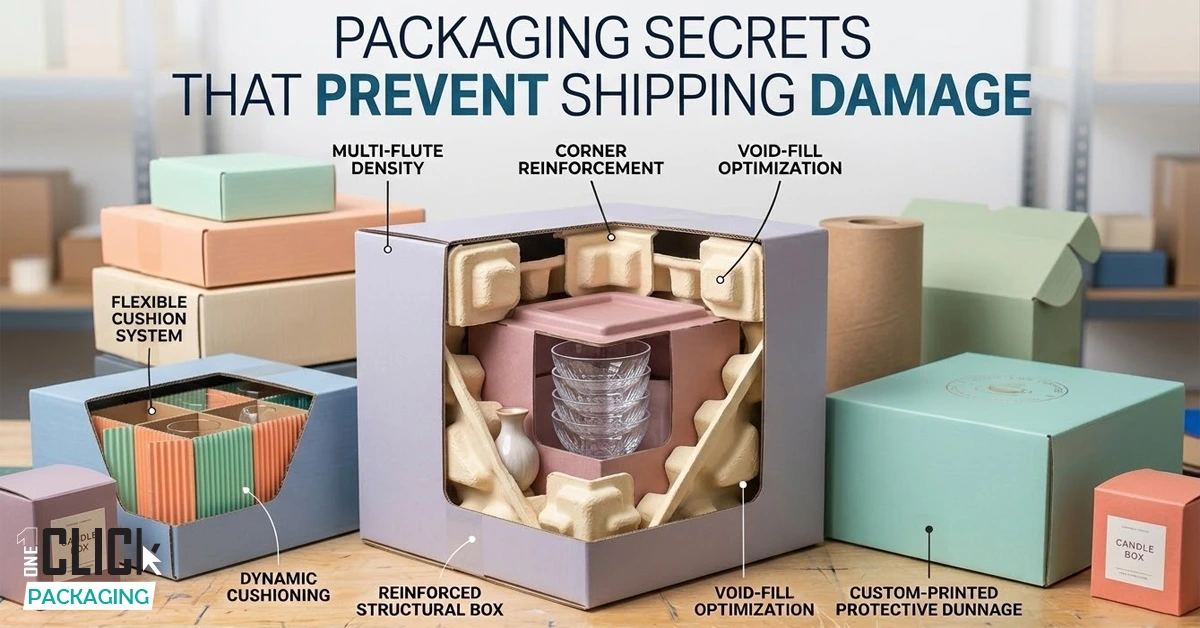
If structural integrity during shipping is your concern, corrugated kraft has specific advantages worth understanding. [See: Corrugated Packaging Secrets That Prevent Shipping Damage]
Specialty food and beverage
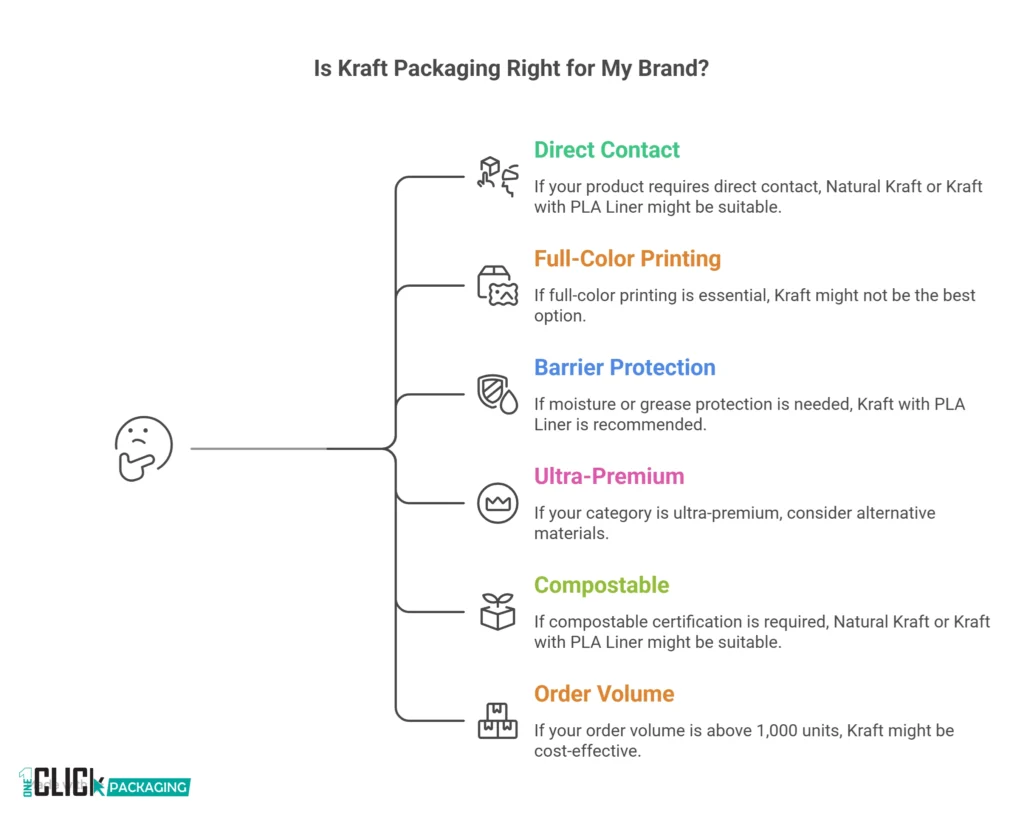
Specialty coffee brands pioneered kraft in custom food packaging as a signal of artisan sourcing. By 2026, it is the dominant format in craft food retail. One note for food brands: standard kraft is not automatically food safe for direct contact. You need FDA-compliant kraft with appropriate lining for direct food packaging. Ask your supplier for migration testing data before committing.
Where Kraft Falls Short: Honest Limitations
Kraft is not universal. Three situations where it genuinely underperforms:
• High-moisture products uncoated kraft absorbs moisture and loses structural integrity. Laminated kraft solves this but complicates the eco story.
• Photographic full-color printing the warm base tone shifts all CMYK colors. Pastels and neons disappear. Bleached kraft or a white ink undercoat is required, at added cost.
• Ultra-premium luxury positioning — kraft signals artisan and considered. It cannot carry opulent luxury (heavy, rigid, glossy) without pairing with other premium materials.
See the most common sourcing mistakes brands make when selecting packaging materials.
The Bottom Line
Kraft became the go-to material because it solved real business problems — cost, shipping performance, and brand perception — simultaneously. In 2026, with containerboard prices dipping and consumer sustainability expectations still rising, the case for kraft has not weakened. It has sharpened.
Use it when your product and audience match the material. Avoid it when moisture barriers, ultra-precise color, or opulent luxury positioning are non-negotiable. And always assess it in its complete form — not just the outer layer.
Quick-Answer FAQ
Is kraft paper more expensive than white cardboard in 2026?
At commodity level, natural kraft is slightly more expensive than standard SBS white paperboard because it uses longer-fiber softwood pulp. However, it is significantly cheaper than rigid boxes and luxury packaging. For most DTC use cases, the cost difference versus white folding cartons is small enough that the aesthetic and sustainability advantages outweigh it.
Can I print my logo in full color on natural kraft?
Full CMYK on natural kraft shifts all colors toward warm brown tones. For logos using 1 to 3 spot colors or white ink, natural kraft works well on kraft coffee bags. For photographic or pastel-heavy designs, use bleached kraft or specify a white ink undercoat in your print brief. Expect a 10 to 20 percent cost increase for white ink applications.
What is the minimum order quantity for custom kraft packaging in 2026?
Digital-printed kraft mailers start at 100 to 250 units through suppliers like Noissue and Sticker Mule. Custom flexo-printed kraft boxes require 500 to 1,000 units minimum to cover plate costs ($180 to $350 per color). True wholesale pricing typically starts at 2,500 to 5,000 units.